Scan, Log, Pick Tonight: Wrapper Driven Recommendations for Smokers

A cigar's wrapper leaf is your quickest clue to likely flavor and aroma, but it's a filter, not a verdict. Wrapper color, variety, and origin point you toward a flavor family and an aromatic intensity, not toward strength. The reliable workflow is simple: identify the wrapper subtype and origin, pick by the flavor you want today, then log what you actually taste so your next pick gets sharper.
TL;DR:
- Wrapper origin and variety significantly influence aroma compounds, microbial activity during fermentation, and ultimately the flavor profile of the cigar.
- Different wrapper types, such as Connecticut Shade, Broadleaf, Maduro, and Habano, deliver distinct flavor families, from creamy and nutty to spicy and earthy.
- A structured tasting log of flavors, aroma intensity, burn quality, and strength enhances future cigar selection and personalization.
- Contextual factors like growing region and fermentation method can cause even similarly labeled wrappers to offer very different sensory experiences.
- Using tools like Paradigm’s AI-powered identification and logging system streamlines discovering wrapper and flavor matches tailored to taste goals.
How wrapper color, variety, and origin shape flavor and aroma
Wrapper leaf carries a disproportionate share of a cigar's aroma, and the way it's grown and processed changes what ends up in that aroma. Shade-grown leaves, grown under cheesecloth to filter sunlight, tend toward thinner, lighter, creamier profiles. Sun-grown leaves thicken up and darken, often trading subtlety for heartier, sometimes sweeter notes. Fermentation time and method push things further, breaking down sugars and proteins into the volatile compounds that give a wrapper its characteristic smell before you've even clipped it.
This isn't guesswork anymore. A 2025 Scientific Reports study found measurable differences in aroma constituents and microbial communities tied directly to tobacco variety and growing origin, supporting the idea that flavor outcomes are shaped by more than one variable at once.
- Variety and origin change the aroma chemistry you'll actually smell and taste.
- Microbial activity during fermentation helps generate the volatile compounds behind a wrapper's signature smell.
- Industry voices consistently argue that wrapper quality should be judged by flavor, aroma, and burn, not just by color alone, according to Cigar Aficionado's guide to cigar shapes and colors.
A wrapper's aroma signature depends on variety and origin, not just shade. The Scientific Reports research ties measurable aroma differences to cultivation environment and fermentation, which means two wrappers that look similar can smoke very differently.
A step-by-step wrapper-first recommendation workflow you can apply tonight
You don't need a lab to use this information. You need a repeatable process, applied the same way every time, so your own data gets better with each cigar.
- Identify the wrapper subtype and origin. Check the band, the retailer's label, or a trusted vendor's notes. Connecticut Shade, Ecuador Connecticut, Broadleaf, Habano, and Maduro all behave differently even when they sit on the same shelf.
- Translate tonight's flavor goal into a wrapper family. Want something creamy and nutty? Lean Connecticut. Want sweet and robust? Reach for Broadleaf or Maduro. Want spice and earth? Habano or a sun-grown wrapper usually delivers.
- Apply a separate strength filter. Wrapper tells you flavor direction, not nicotine load. Check the binder and filler tobaccos, and factor in the format: a thicker ring gauge burns slower and often milder, while a slim cigar concentrates flavor and strength faster. Our guide to strength versus body versus flavor breaks down why these are three separate variables.
- Smoke it, then record structured notes. Capture primary flavors, aroma intensity, burn quality, and perceived strength. Loose impressions fade; a structured note survives to inform your next purchase.
Pro Tip: Rate the same cigar twice across two different sessions a few weeks apart. Humidity, mood, and palate fatigue shift your perception more than most smokers expect.
Each step feeds the next one. Skip step 3 and you'll keep picking cigars that taste right but hit harder than you wanted. Skip step 4 and you'll keep relearning the same lessons.

Wrapper family guides: what each leaf actually tastes like
Knowing the broad families saves you from relying on color alone, which experts warn against repeatedly.
- Connecticut Shade: Light tan, grown under cloth cover, typically creamy, mild, and nutty. A safe starting point if you want flavor without intensity.
- Ecuador Connecticut: Grown outdoors under natural cloud cover rather than cheesecloth, often thinner in appearance but can carry more body than its Shade cousin despite the shared seed lineage, a distinction Cigar Aficionado's reporting on Connecticut origins makes clear.
- Connecticut Broadleaf: Despite the shared regional name, Broadleaf is sun-grown and dark, and wrapper-grade leaves must meet specific size, elasticity, and flaw standards that affect both quality and availability, according to a University of Kentucky fact sheet on Connecticut Broadleaf production. Expect sweeter, roaster, sometimes chocolate-like notes.
- Maduro: Extended fermentation darkens the leaf further and usually pushes flavor toward sweetness, dark fruit, or a roasted edge. A strong candidate for dessert pairings or an evening when you want more weight on the palate.
- Habano and sun-grown browns: Thicker, oilier, grown in full sun, these wrappers tend to deliver pepper, spice, and earthy aromatics. Pick these when you want a tobacco-forward, spicier session.
Regional origin adds another layer. Dominican-grown leaf tends toward smooth, mellow traits. Cuban and Caribbean-grown tobacco tends toward spice and aromatic intensity. Research on cigar tobacco leaves from Brazil, Indonesia, China, and Dominica found distinct volatile flavor compound profiles by region, including leathery and peppery notes from Indonesia and China, caramel and herbal notes from Brazil, and milk, honey, or nutty notes from Dominica, according to a Frontiers in Microbiology study on regional cigar tobacco leaves. If your flavor goal is "cream and cedar," reach for Connecticut Shade from a Dominican-grown blend. If it's "sweet and rich," go Broadleaf or Maduro. If it's "pepper and leather," a Habano or Nicaraguan sun-grown wrapper fits better. Our piece on Cuban versus New World terroir digs deeper into how growing region shapes these outcomes.
Combine wrappers with palate history and a separate strength filter
Wrapper tells you where the flavor is likely headed. It does not tell you how hard the cigar will hit, because strength comes from the full blend: wrapper, binder, and filler together, plus the format you're smoking. A thin Habano wrapper over a mild Dominican filler smokes very differently than that same wrapper over a Nicaraguan ligero-heavy blend.
What's worth recording each session:
- Your five palate dimensions: sweetness, spice, creaminess, earth, and aroma intensity.
- A separate strength rating, independent of flavor notes.
- Dominant flavors and how they shifted from first third to last, a pattern our article on how cigars change across the three thirds explains in more detail.
- Burn consistency, since uneven burn can distort your read on a wrapper's true character.
Pro Tip: Note the origin alongside the wrapper family. Microbial activity during fermentation varies by region, and that variation shows up in the final aroma even when the wrapper name on the band looks identical, as research on microbial communities and volatile compounds across different growing origins has found.
A cigar journal that recognizes the full cigar — band, wrapper, shape, and cap — stores your notes, and builds a five-dimension palate profile over time turns this from a memory exercise into a searchable record you can actually use before your next purchase.
A quick lesson from logging my own picks
A few months back I picked a Habano-wrapped robust expecting pepper and earth, which it delivered, but the strength caught me off guard once I checked the ligero-heavy filler afterward. Next time I kept the wrapper family but switched to a milder binder blend and a slightly larger ring gauge. Same flavor direction, noticeably gentler. Logging both sessions side by side made the pattern obvious in a way memory alone never would have.
— Yaro
Let Paradigm handle the wrapper guesswork
We built Paradigm to take the workflow in this guide and make it fast. Photograph a cigar from our catalog — band, wrapper, shape, and cap together — and we'll identify the wrapper, origin, and blend details in seconds instead of leaving you to cross-reference labels by hand.
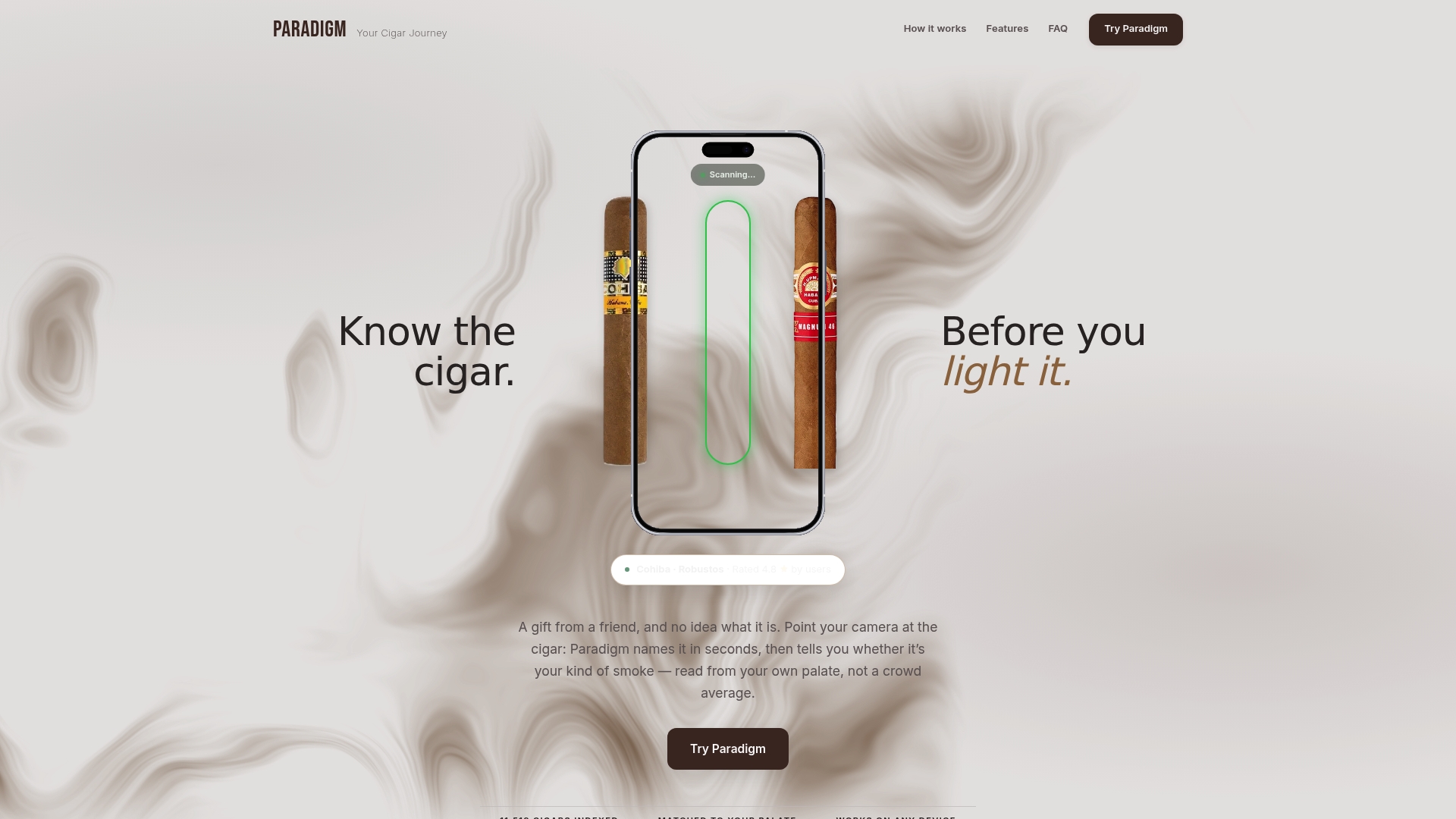
- Our AI-powered Tasting Match tells you, before you light up, whether a cigar fits your flavor and strength preferences, with an explanation behind the call.
- Every session gets logged into a private, searchable history that sharpens your five-dimension palate profile over time.
- As a progressive web app, Paradigm works straight from your phone's browser, no download required.
Start building your own wrapper-driven recommendations at Paradigm.
FAQ
Does a darker wrapper always mean a stronger cigar?
No. Wrapper color signals likely flavor direction, not strength, since strength comes from the full blend of wrapper, binder, and filler plus the cigar's format. A dark Maduro can smoke milder than a light Connecticut if the filler tobacco underneath is gentle.
How do I pick a wrapper for a specific flavor I want tonight?
Match the flavor goal to a wrapper family: Connecticut Shade for creamy and nutty, Broadleaf or Maduro for sweet and robust, Habano or sun-grown wrappers for pepper and earth. Then check binder and filler separately to confirm the strength lands where you want it.
Why do two cigars with the same wrapper name taste different?
Variety, growing origin, and fermentation all shape the volatile flavor compounds in a wrapper, so leaf grown in different regions produces measurably different aroma profiles even under a shared label, as Scientific Reports research on cigar tobacco aroma has shown. Checking the origin alongside the wrapper family gives you a more reliable read.
What should I track to improve my cigar recommendations over time?
Record your dominant flavors, aroma intensity, burn quality, and a separate strength rating for every cigar you smoke. A structured log built around consistent dimensions, rather than loose impressions, produces better matches the next time you shop.
Sources
- Characterization of aroma profiles and microbial communities of cigar tobacco leaves from different varieties and origins and their correlations analysis | Scientific Reports
- Cigar shapes, sizes and colors | Cigar Aficionado
- Analysis of microbial community, volatile flavor compounds, and flavor of cigar tobacco leaves from different regions | Frontiers in Microbiology
- Connecticut Broadleaf cigar wrapper tobacco fact sheet (University research)
Recommended
- How accurate is AI-based cigar recognition, and why do photo-ID scanners often get it wrong?
- How do I decide what cigar to smoke next instead of picking randomly?
- What is the best cigar app for AI-powered cigar recommendations, and how do these features actually work?
- Which cigar-tracking app should I use?