45–60 vs 20–30 Minutes: Long Filler vs Short Filler for Your Session
Long filler (tripa) uses whole tobacco leaves running the cigar's length, while short filler (picadura) uses chopped or scrap leaf. That structural difference is why long filler tends to smoke slower, cooler, and with more layered flavor, while short filler burns faster and costs less. Neither is "better" outright. They're built for different sessions, and knowing which one is in your hand changes what you should expect from it.
TL;DR:
- Long filler cigars burn more slowly, evenly, and develop layered flavors, while short filler cigars burn faster and offer a more immediate profile.
- You can identify long filler by examining the foot for continuous leaf strips, whereas short filler shows a confetti-like mix of small pieces.
- Long filler usually costs more because it requires more time-consuming preparation and aging, but it benefits from better flavor evolution during a longer session.
- Short filler is ideal for quick smokes under 30 minutes, especially when you do not want to commit to a longer, more complex experience.
- Mixed filler offers a middle ground, combining long and short tobacco, often delivering near-premium performance at a lower cost.
Long Filler vs Short Filler: The Trade Terms You Need to Know
In cigar-making, the industry doesn't say "long filler" and "short filler" on the factory floor. Rollers talk about tripa, the bunch of tobacco inside the binder, and whether that tripa is made from whole leaves or from picadura, chopped leaf and trimmings. Long filler consists of whole tobacco leaves running the length of the cigar, while short filler consists of chopped or smaller fragments.
There's a third category worth knowing before you shop: mixed filler, sometimes called a "Cuban sandwich" because it layers long leaf around a core of short scraps. You'll also hear "medio tiempo" tossed around, referring to a rare, potent priming leaf sometimes added to premium long-filler blends rather than a filler type itself.
As a rough production association, long filler usually means handmade, and short filler usually means factory or machine-made. That's not a hard rule everywhere, but it holds often enough to guide your first read of a box label.
How Construction Differences Shape Every Cigar You Smoke
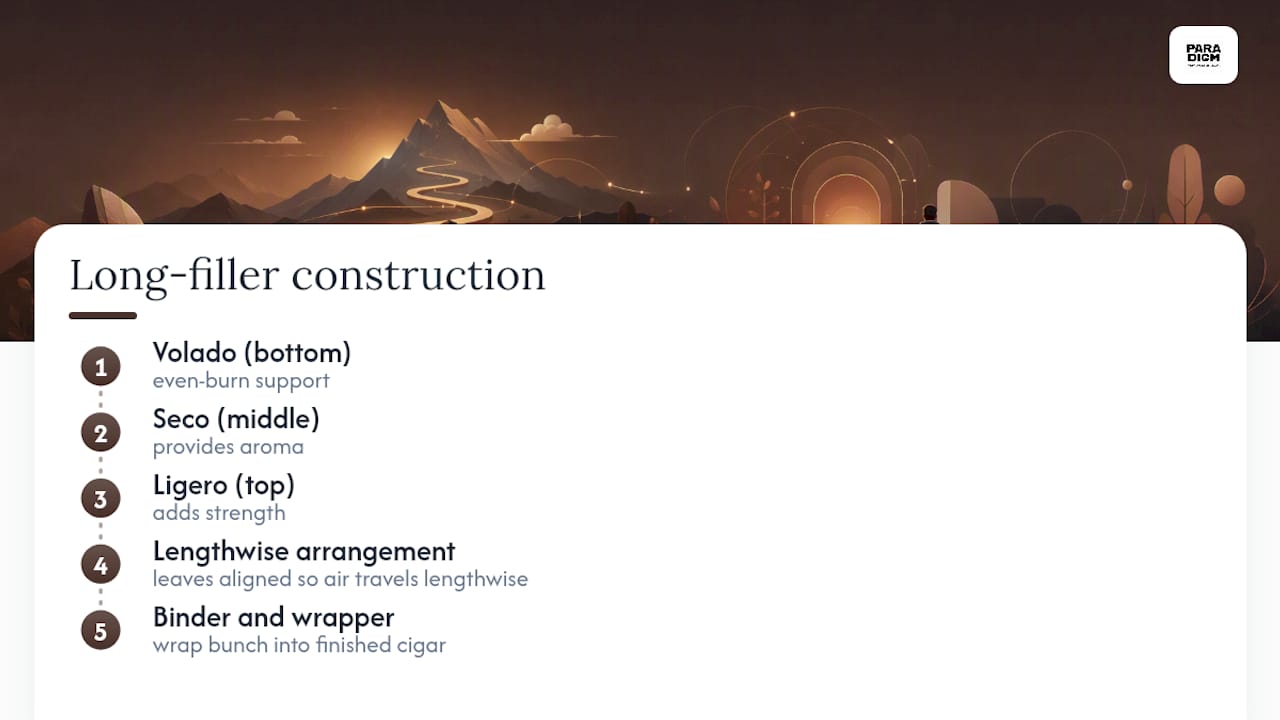
A long-filler bunch starts with whole leaves selected from specific primings on the tobacco plant: volado from the bottom for even burn, seco from the middle for aroma, and ligero from the top for strength. A skilled bonchero arranges these leaves so air can travel the length of the cigar, then wraps them in binder and wrapper. That structure is what lets a cigar's flavor shift from mild to bold as you smoke through it, because different leaf types are doing different work in different sections of the bunch.
Short filler skips most of that architecture. Trimmings and chopped leaf get bunched by machine or by hand at high speed, with far less attention to which leaf goes where. Construction differences between whole leaves and chopped leaf drive the labor and aging gaps that explain typical price bands between the two categories.
Long filler also demands more fermentation and aging time before it ever reaches a roller's table, and quality control tends to be tighter because a single bad leaf can ruin an entire bunch. Short filler production moves faster precisely because it skips those steps, which is exactly why it costs less on the shelf.
What You'll Actually Notice in the Smoking Experience
Burn rate is the first thing you'll notice. Long-filler cigars burn slower and more evenly, hold a firmer ash, and unfold flavor in layers, while short-filler cigars burn faster and hotter with a flatter, more immediate profile. That heat difference isn't subtle. A short-filler stick smoked too fast can turn harsh in the back third; a long-filler cigar smoked at a relaxed pace often gets more interesting as it goes, a pattern tied to how flavor shifts across a cigar's three thirds.
Here's what separates the two in practice:
- Draw and resistance: long filler generally offers a more consistent draw because the leaves run parallel and don't clump; short filler can draw tight or loose depending on how densely it was packed.
- Ash behavior: long filler tends to hold a longer, firmer ash before it drops; short filler ash is often flakier and needs tapping more often.
- Flavor timeline: long filler evolves, sometimes dramatically, from first light to nub; short filler tends to deliver most of its character in the opening minutes and holds steady from there.
- Session length: a long-filler robusto can run 45 minutes to an hour; a short-filler cigar of the same size often burns through in 20 to 30.
None of that makes short filler a lesser choice for every occasion. If you've got fifteen minutes on a porch and don't want to commit to a full session, a short-filler cigar does exactly what you need without asking for your afternoon.
Where Mixed Filler Fits Between the Two
Mixed-filler cigars combine long-filler and short-filler tobacco, and they exist because not every smoker wants premium pricing or premium commitment every time. A mixed-filler bunch might wrap long leaf around a core of shorter pieces, giving you a draw that feels closer to a long-filler cigar without the full cost of one.
Done well, this is a legitimate middle tier rather than a downgrade. Mixed filler can be hand-rolled and offer near-premium draw characteristics while keeping production costs down, which is why some respected mid-tier lines lean on it deliberately rather than apologetically. The honest way to judge one is by how it smokes, not by what's technically inside it: even burn, steady draw, and flavor that holds up past the first third are good signs regardless of the filler label. Keep a few mixed-filler sticks in the humidor for days when you want more than a short-filler cigar but don't need a two-hour long-filler production.
How to Tell Long Filler From Short Filler Before You Light Up
You don't need to take anyone's word for it. Look at the cigar's foot, the end you'll light. A continuous cross-section of leaf indicates long filler; a confetti-like mix of small pieces indicates chopped or mixed filler. This one check tells you more than the band ever will.
A few more habits worth building:
- Squeeze gently along the length. Long filler feels evenly firm from head to foot; short filler often has soft or lumpy spots where tobacco settled unevenly.
- Check the draw before lighting. A long-filler cigar usually draws with consistent, moderate resistance; a tight or airy draw can signal a rushed short-filler bunch.
- Watch how it changes. If the flavor is basically the same at minute five and minute thirty, you're likely smoking short filler. If it shifts noticeably, you're likely in long-filler territory.
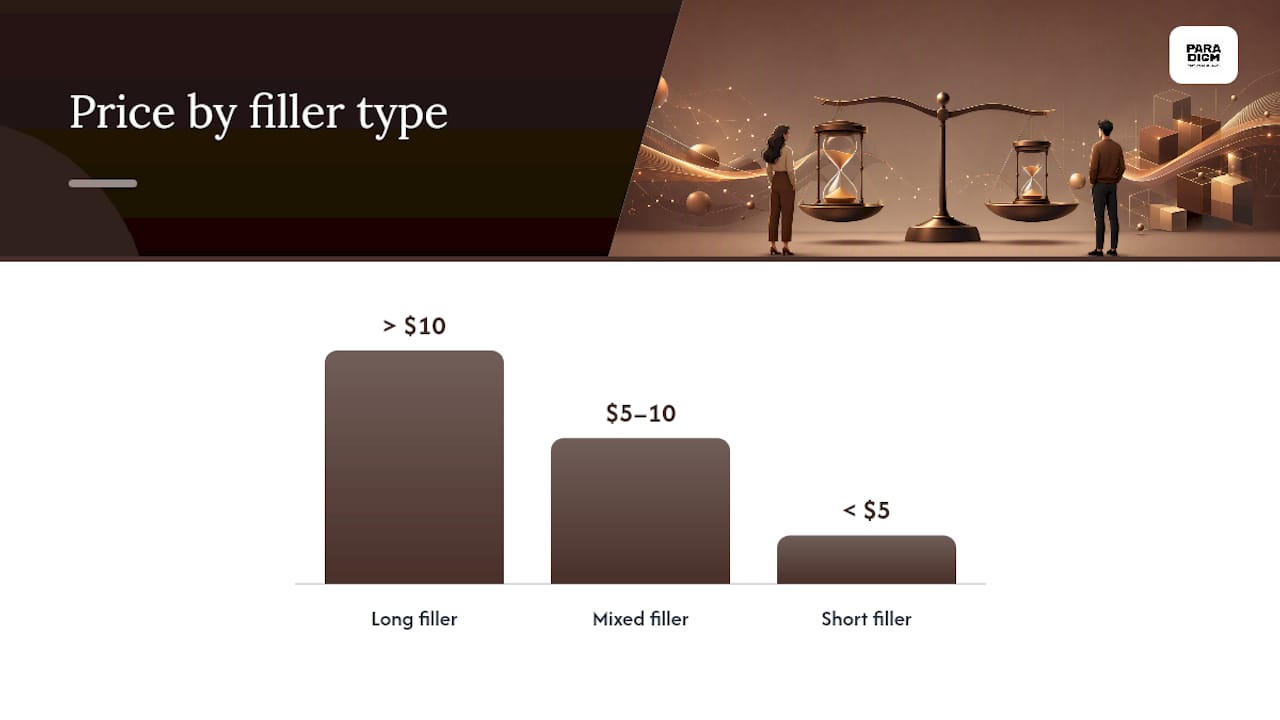
- Use price as a rough filter. Cigars above roughly $10 retail are usually long filler, mixed filler tends to fill the $5 to $10 range, and pure short filler is common below that, though exceptions exist in both directions.
Long filler also rewards patience in the humidor. It benefits more from proper aging than short filler does, since the whole-leaf structure has more to gain from time mellowing out ligero and marrying the blend's components.
Pro Tip: Cut a small sliver off the foot before you commit to a full light. A quick look at that cross-section will tell you more about what's inside than the vitola name on the band.
Tracking Which Filler Type Actually Suits You
Reading about filler type is one thing. Remembering which cigars you actually enjoyed is another problem entirely, and it's the one Paradigm Your Cigar Journey was built to solve. Point your camera at the cigar and the app recognises it, band, wrapper, shape and cap together, pulling up the cigar from a catalog of more than 11,500 Cuban and New World entries, including construction details you can cross-reference against what you just learned here.
From there, you can log a tasting note on the spot: filler type, burn behavior, how the flavor moved across the thirds, whether the draw held up. Do that consistently and your five-dimension palate profile starts reflecting a real pattern, not a guess. A simple workflow works well here: scan the cigar, tag whether it's long, short, or mixed filler, rate the smoke, and save the note before you forget the details. Six months later, that history tells you far more about your own preferences than any general rule about filler type ever could.
A Fair Word for Both Sides of the Humidor
Cigar culture leans hard toward treating long filler as the "serious" choice and short filler as the compromise, and that framing does readers a disservice. Both categories earn a place in a well-stocked humidor, and dismissing short filler outright just means fewer good options on a Tuesday afternoon when an hour-long smoke isn't realistic.
What changes the equation is tracking your own reactions instead of relying on category assumptions. Someone who logs tasting notes over a few months usually discovers their preferences don't map neatly onto "long filler good, short filler lesser." Try documenting your next stick, whatever the filler type, and see what the pattern actually shows.
— Yaro
Try Paradigm's Cigar Scanner on Your Next Cigar
A cigar journal app turns everything in this guide into something you can actually use at the moment you're holding a cigar, not just something you read once and forget. Instead of guessing at a band or trying to remember what a shop clerk told you last month, you scan the cigar, capturing its wrapper, shape, cap, and markings, pull up construction and rating details from a large cigar catalog, and get a personalized Tasting Match based on your own strength and flavor preferences.

That matters most right after you finish a cigar, when the details are still fresh: how the draw felt, whether the ash held, whether the flavor built or flattened out. Paradigm lets you record that as a tasting note and tag the filler type, building a private smoking history you can search later instead of relying on memory. Try the progressive web app from your phone's browser, no download required, and start logging your next long-filler or short-filler cigar before the flavor fades from memory.
Sources
This guide draws on trade explainers and construction breakdowns from Cigar Aficionado, Cigar Chief, Cigar Grail, and The Next Cigar. For more on how filler and vitola interact, see how ring gauge affects flavor.
- What Is Long- and Short-Filler? (Cigar Aficionado glossary / article)
- Long-filler vs short-filler cigars: a deep cut (The Next Cigar)
- Long filler vs short filler: which makes a better cigar? (Cigar Chief)
- Long filler vs short filler cigars (Cigar Grail)
FAQ
How can you tell if a cigar is long filler?
Cut a thin sliver off the foot and look at the cross-section. Continuous strips of whole leaf mean long filler, while a confetti-like scatter of small pieces means short or mixed filler.
Is smoking one or two cigars a week okay?
That's a personal health and lifestyle decision outside what this guide covers, but moderate, occasional smoking is how most enthusiasts approach the hobby rather than daily use.
What is the "1/3-2/3" or "135" guidance sometimes mentioned for cigars?
There's no single, widely agreed "135 rule" in cigar terminology; if you've seen it referenced, it's not a standard industry framework, and it's worth treating with caution rather than as an established guideline.
What is cigar filler, exactly?
Filler is the tobacco bunched inside the binder and wrapper that makes up the bulk of a cigar. It comes in three forms: long filler (whole leaves), short filler (chopped leaf), and mixed filler (a blend of both).
Does Paradigm show whether a cigar is long or short filler?
Paradigm's catalog of 11,500+ Cuban and New World cigars includes construction details you can check after scanning your cigar's full profile, band, wrapper, shape, and cap, and you can log your own observations as a tasting note tied to your palate profile.
Recommended
- Does a fatter cigar (bigger ring gauge) actually taste different from a thin one?
- How do I decide what cigar to smoke next instead of picking randomly?
- What's actually different between a box-pressed cigar and a round one?
- What's the actual difference between a cigar's strength, its body, and its flavor?