6 Cuts and Lighting Moves That Change Torpedo vs Parejo Smoke
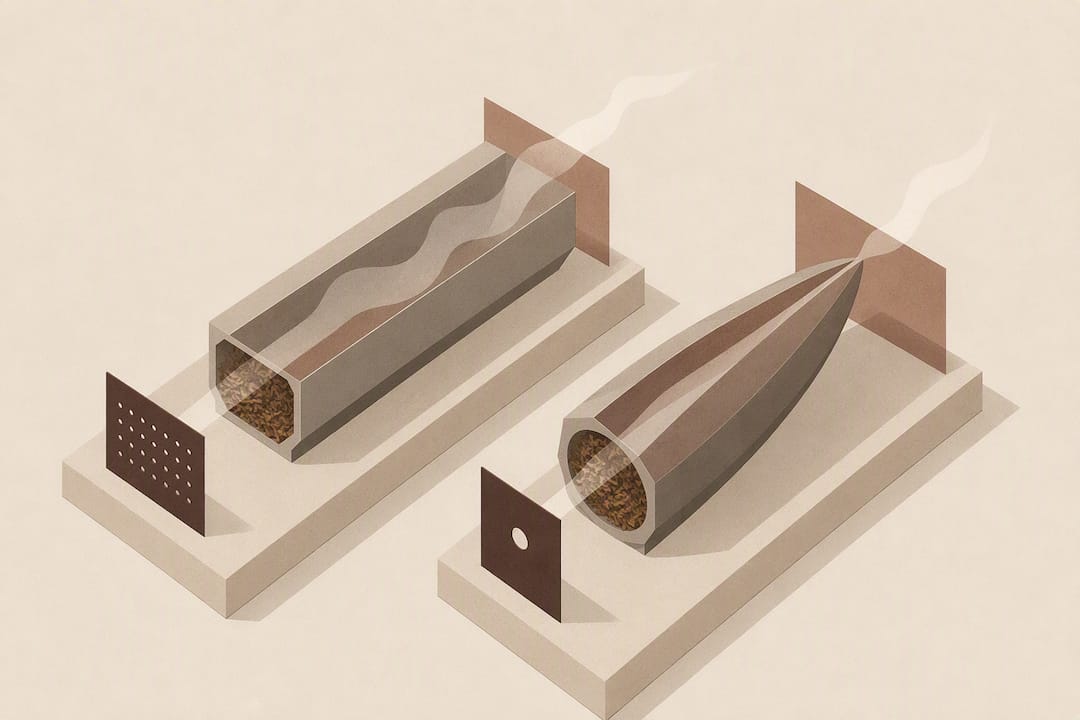
A parejo is the classic straight-sided cigar with an open foot and a rounded cap. A torpedo is a figurado that tapers to a pointed head, which concentrates flavor and gives you real control over draw through how you cut it. Parejos smoke more predictably; torpedoes reward attention with more intensity. If you want a forgiving, no-fuss smoke, start with a parejo. If you want concentrated flavor and a shape you can fine-tune, reach for a torpedo.
TL;DR:
- Torpedoes concentrate flavor through their tapered heads, but require precise cutting and careful lighting techniques for optimal enjoyment.
- The construction quality of a torpedo, especially its taper symmetry and cap sealing, directly influences burn consistency and draw quality.
- Shape and size measurements are more reliable than band names, which can vary between manufacturers, for selecting the right cigar type.
- A personal smoking record can help identify patterns in how shape influences flavor perception and cue future shape choices.
- The reputation of torpedoes as complex or advanced is overstated; their main challenge lies in cutting accuracy rather than intrinsic flavor differences.
Torpedo Vs Parejo: The Shape Differences at a Glance
Most cigars split into two families: straight-sided parejos and shaped figurados, and the torpedo is the best-known figurado, recognized by its pointed, tapered head. Everything else about how a cigar smokes traces back to this basic split.
A parejo keeps the same ring gauge from foot to head, with an open end for lighting and a rounded capped head you clip before smoking. That uniform body means the burn line stays level and the draw stays consistent, which is why parejos have a reputation for being nearly impossible to mess up. A torpedo, by contrast, narrows gradually over the final two to three inches before the head, forming a point you cut open yourself.
Here's how the two shapes stack up on the details that actually affect your smoking session:
- Parejos include familiar vitolas like the Robusto and Toro, both built for a straightforward, even burn.
- Torpedoes and pyramids typically run 6 to 7 inches with ring gauges in the low 50s, while belicosos trim that taper down to a shorter, blunter point around 5 to 5.5 inches.
- If you're unsure which vitola you're holding, checking the actual shape and size reference beats guessing from the band alone.
How Shape Changes Draw, Burn, and Flavor Over Time
The tapered head on a torpedo does something a straight parejo simply can't: it funnels smoke and aroma into a smaller exit point right before it hits your palate. That funneling effect concentrates the perceived intensity of the smoke, even though the tobacco blend underneath hasn't changed at all. You're tasting the same leaf, just delivered through a narrower channel.
A parejo's steady ring gauge means the burn rate and airflow stay nearly constant from light to nub. A torpedo's taper works against that consistency on purpose. As the cigar narrows, the same amount of smoke gets pushed through less space, which is why torpedoes are often described as building in intensity rather than staying flat.
What to expect across a torpedo's three thirds:
- First third: Mellower than you'd expect given the pointed head, since the taper hasn't fully engaged yet.
- Middle third: Flavor sharpens noticeably as the taper narrows and concentration increases.
- Last third: Runs hotter and more concentrated, often the most intense stretch of the smoke.
One point worth remembering: shape changes perception, not strength. A mild blend rolled into a torpedo will taste more vivid, but it won't suddenly deliver more nicotine than the same tobacco in a parejo. If you want to understand why cigars shift across the three thirds regardless of shape, that curve applies to both, just amplified in a figurado.
Cutting and Lighting a Torpedo vs a Parejo
Technique matters more with a torpedo than a parejo, mostly because the pointed head gives you room to get it wrong.
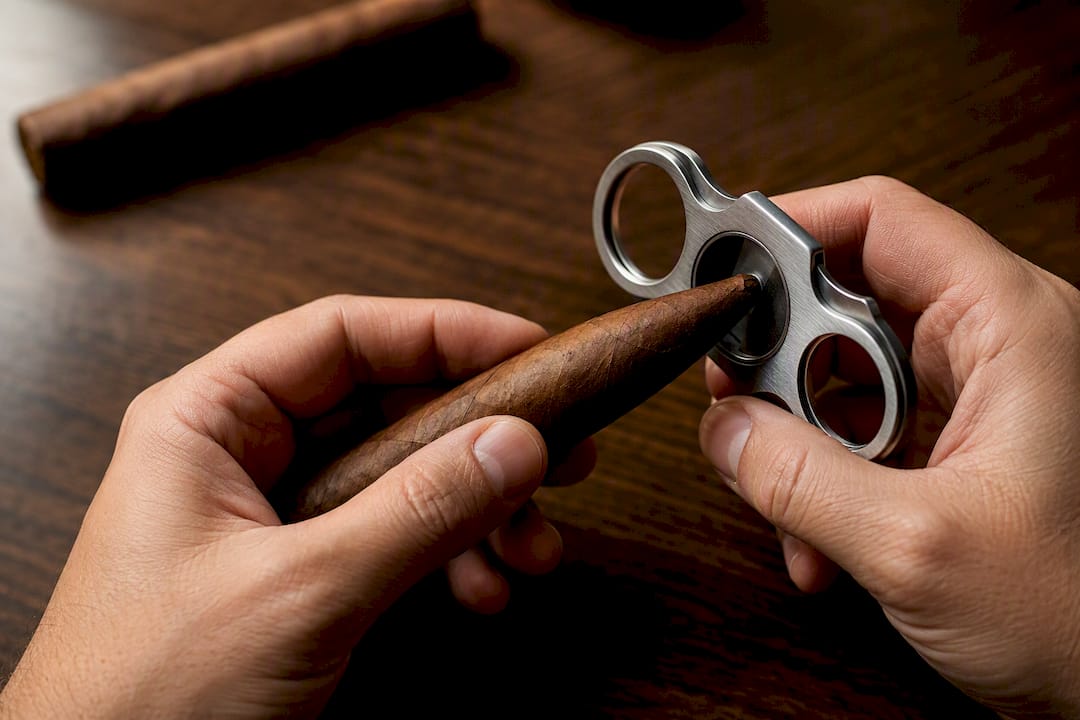
- Cut a torpedo small first. Start with a shallow straight cut near the tip, just enough to open the wrapper. You can always cut more; you can't undo an oversized cut.
- Use a standard guillotine on a parejo. The open foot and consistent cap mean a clean straight cut across the rounded head works every time.
- Reach for a punch or V-cutter on a torpedo when you want a tighter draw, since those tools open a smaller channel than a straight cut.
- Toast the narrow tip evenly on a figurado. Rotate slowly so the point catches flame on all sides before you draw.
- Toast the full foot on a parejo. The open end lights faster and more evenly, so a few rotations over the flame is usually enough.
- Watch your draw resistance. A torpedo that pulls too tight means your cut was too small; widen it slightly rather than puffing harder.
Pro Tip: If your torpedo starts tasting harsh in the final third, slow your puff rate. The narrow head traps heat faster than a parejo's uniform body, and a hot last third is usually a cadence problem, not a bad cigar.
Canoeing (an uneven burn line that dips to one side) shows up on both shapes but is more common on figurados because of the taper. Rotate the cigar gently every few minutes to correct it before it runs deep. For a full breakdown of cutter types and when each one earns its place in your pocket, the comparison of guillotine, punch, and V-cutters is worth bookmarking, and the same logic extends to general cutting and lighting fundamentals for either shape.
What to Check Before Paying a Premium for a Torpedo
Figurados take more rolling skill than parejos, and that extra labor and quality-control risk is usually why torpedoes cost a bit more than a comparably sized parejo. The taper has to narrow gradually and symmetrically, and a rushed roll shows up fast as soft spots or an off-center point.
Before you buy, check for these signs of solid construction:
- An evenly firm taper with no soft or spongy patches near the head.
- A burn line that should stay level, not tilted, once lit.
- A cap that's smooth and properly sealed, not lumpy or loose.
- Consistent ring gauge through the straight body before the taper begins.
Since manufacturers use vitola names inconsistently, a "torpedo" from one maker might match a "pyramid" or "belicoso" from another. Trust the measurements on the band or box over the name printed on it.
Tracking How Shape Affects Your Own Palate
General guidance only goes so far, because your reaction to a torpedo's concentrated draw or a parejo's steady burn is personal. A cigar journal app lets you scan a cigar band to pull actual vitola dimensions from a catalog of many Cuban and New World cigars, so you're comparing real measurements instead of a marketing label.
A tasting match feature weighs your preferred strength and flavor profile against a given blend, which matters more once you start comparing the same tobacco across different shapes. Log a torpedo session, then log the same blend in a parejo, and your private smoking history starts showing patterns you'd otherwise forget between smokes. Experts generally suggest starting with a parejo before experimenting with a torpedo, and a searchable record makes that progression easier to track than memory alone.
Why the Torpedo's Reputation Is a Little Overblown
The torpedo gets treated like the advanced-degree version of cigar smoking, and that reputation does beginners a disservice. It's not harder to enjoy, it's just less forgiving of a sloppy cut. Most of what people credit to "torpedo flavor" is really just physics: a narrower exit point concentrating the same smoke that a parejo spreads out evenly.
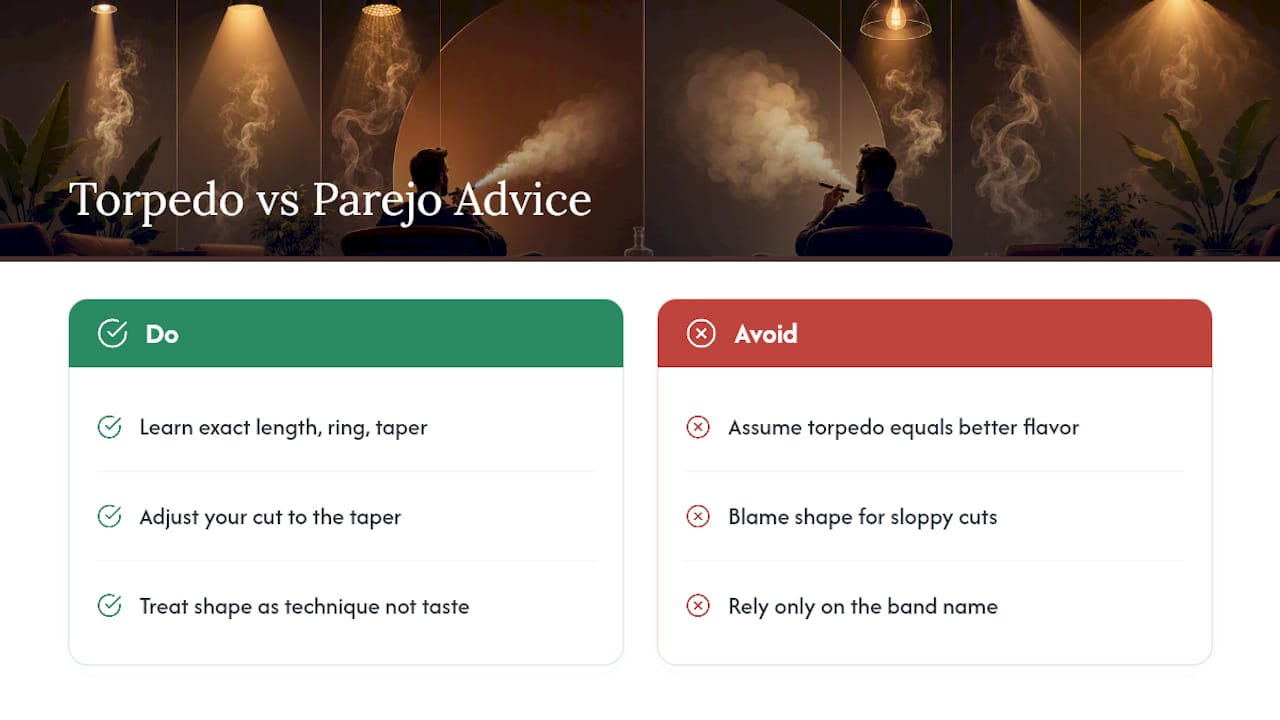
Where conventional advice falls short is treating shape choice as a taste preference when it's really a technique preference. Two smokers with identical palates can have opposite experiences with the same torpedo depending on how they cut it. That's a controllable variable, not a fixed trait of the shape.
If I had to prioritize one thing for a reader picking between these two, it wouldn't be flavor profile or price. It would be dimension literacy: knowing the actual length, ring gauge, and taper length you're buying, rather than trusting whatever the band calls it. Get that right first, and the parejo versus torpedo decision becomes a lot less mysterious.
— Yaroslav
Sources
- Cigar Shapes Explained: Parejo vs. Figurado
- Cigar Shapes and Sizes Explained: Parejo, Figurado, and Everything In Between
- Belicoso vs Torpedo Cigars: What's Different?(And Why It Matters)
- Understanding The Difference Between Pointed Cigars
FAQ
Are torpedo cigars better than parejos?
Neither shape is objectively better. Torpedoes concentrate flavor and offer more draw control through the cut, while parejos deliver a steadier, more predictable smoke.
What's the point of a torpedo cigar?
The tapered head funnels smoke into a narrower channel before it reaches your palate, which intensifies perceived flavor and lets you adjust draw tightness by how you cut the tip.
What is a 6-inch cigar called?
A 6-inch cigar can fall into several vitolas depending on ring gauge, including a Toro (parejo) or a Torpedo/Pyramid (figurado), so the length alone doesn't determine the shape name.
What is the shape of a parejo cigar?
A parejo has straight sides with a uniform ring gauge, an open foot for lighting, and a rounded capped head you clip before smoking.
Recommended
- What's actually different between a guillotine cutter, a punch cutter, and a V-cutter?
- What's the right way to cut and light a cigar so it doesn't go wrong from the start?
- What is a cigar's 'vitola,' and how many different shapes and sizes actually exist?
- Why does my cigar keep going out, burn unevenly, or taste bitter — and how do I fix it?