5 Tags, 5 Fields: App First Occasion Tags for Cigar Journal Users
Tag cigars by occasion by adding a short occasion label (5 to 10 options total) plus three essential fields: date, estimated duration, and rating. Once that's in place, filters or saved lists pull the right cigar for any event in seconds. An app that recognizes the whole cigar—band, wrapper, shape, and size—plus saved searches makes the habit repeatable instead of a one-time cleanup project.
TL;DR:
- Using occasion tags helps filter cigars quickly based on event type, duration, and pairing, reducing decision time in time-sensitive moments.
- Start with a minimal set of five tags, such as everyday, celebration, travel, short smoke, and after dinner, and expand cautiously up to ten.
- Record essential fields alongside each tag, including date, actual smoking duration, pairing, and a rating, for effective future filtering.
- Tag cigars at purchase for planning and re-tag after smoking to reflect actual experience, allowing filters to adapt over time based on ratings.
- Organize the physical humidor with zones matching your tags, using labels or stickers correlated with app categories for faster selection.
Why Tagging by Occasion Actually Helps
An occasion tag is a short label attached to a cigar entry in your journal, something like "wedding" or "weekday," that lets you filter your smoking history by the moment you're planning for instead of scrolling through everything you've ever logged. The value isn't organizational tidiness. It's speed.
Standing in front of a humidor with 40 cigars and 20 minutes before you have to leave is a recipe for grabbing the wrong stick. Occasion tags cut that decision down to a filtered list of three or four options that actually fit the moment, whether that's a short smoke before work or something with enough body to survive a two-hour dinner.
Tagging also protects your better cigars. Experienced smokers keep a small active rotation and use labeling to separate everyday smokes from special-occasion stock and long-term aging boxes, which cuts down on the chaos of a humidor where nothing is distinguishable from anything else. The benefits show up fast:
- Less time spent deciding, especially when you're already pressed for time
- Better pairing outcomes because duration and body match the event
- Fewer accidental "sacrifices" of aged or special cigars on random weeknights
- A humidor that stays organized because tags map to physical zones
Ready-Made Occasion Tags You Can Copy Today
You don't need to invent a taxonomy. Start with a minimal set and expand only if you find yourself reaching for something that doesn't fit.
- Everyday — your reliable, no-thinking-required smokes for a normal evening.
- Celebration — birthdays, promotions, closings, anything worth marking.
- Travel — cigars chosen specifically because they hold up outside a controlled humidor.
- Short smoke — anything under 45 minutes, for mornings or tight windows.
- After dinner — fuller-bodied cigars meant to follow a meal, not precede one.
That five-tag starter set covers most smokers' actual habits. Once it feels natural, extended tags add nuance without turning your journal into a spreadsheet nightmare: gifting (cigars you'd hand to someone else), outdoor (weather-resistant choices for a patio or campsite), morning (lighter, brighter profiles), contemplative (solo smokes meant for thinking, not socializing), and pair with coffee for the specific combinations you've learned actually work.
Cap your active tag list at 6 to 10 entries. Categorizing by brand, strength, or wrapper is a common organizational method, and it's tempting to layer that onto occasion tags too. Resist it. A tag list that's too granular becomes its own decision fatigue problem, which defeats the entire point.
What to Record Alongside Every Occasion Tag
The tag alone isn't enough. It needs a handful of fields to actually function as a recommendation signal later, not just a label you forget you added.
Five fields are non-negotiable:
- Occasion tag — the label itself (celebration, travel, and so on)
- Date — when you smoked it, which lets you spot patterns over time
- Duration estimate — how long it actually took, not how long you planned for
- Pairing — coffee, whiskey, nothing, whatever you had alongside it
- Rating — a simple 1 to 5 score tied to that specific occasion
Optional fields add texture once the basics are habitual: mood, setting (solo versus guests), humidity or age at time of smoking, and vitola. Structured fields like these are what let a single log entry become a searchable reference months later instead of a vague memory you can't retrieve.
Pro Tip: Don't log everything as free text. Structured fields are what your app's filters actually search against. A paragraph of tasting notes is nice to reread, but it won't power a saved list.

How to Build the Tagging Habit Inside an App
The workflow only works if it's fast enough to survive contact with real life. Here's the sequence that holds up:
- Scan the cigar—band, wrapper, and shape—open the cigar page, add the occasion tag plus the four required fields, save it as an "occasion pick."
- Build smart lists once you have enough entries: "short smoke + morning + rating 4 or higher" turns into a one-tap filter for busy weekdays.
- Tag at purchase for anything you're buying specifically for travel or a future event, then tag again at first smoke once you know if it actually delivered.
- Use repeat ratings to promote or demote a cigar for a given occasion. If a "celebration" pick keeps landing 3s, it doesn't belong in that filter anymore.
That last point matters more than it sounds. Occasion tags aren't static. They should shift as your palate and your ratings accumulate evidence.
Matching Your Tags to the Physical Humidor
Digital tags only save time if the physical humidor matches them. Storing everyday smokes up front, younger cigars off to the side, and long-term aging stock in the back with dated cards means your hand goes to the right section before you've even opened the app.
- Set up three physical zones: active rotation, special/hold, and travel/packing.
- Use a sticker or index card that mirrors your app's tag name, so "celebration" in the app matches a labeled shelf, not a guess.
- Check rotation monthly and move cigars based on purchase date. Rotating older stock forward every few months keeps things from getting lost at the back.
Three Scenarios You Can Copy Without Adapting
Weekday quick smoke. Filter for duration under 45 minutes, rating 4 or above, and a lighter body. Pull from your "short smoke" tag and skip anything flagged "special." This is a five-minute decision, not a ritual.
- Open your saved "weekday" filter.
- Pick the top-rated result you haven't smoked in the last two weeks.
- Log duration and rating immediately after, even if it's a quick one-line entry.
Wedding or celebration. Filter for anything tagged "celebration" or aged past a year, then double-check pairing notes from past entries. A cigar that scored well solo might not hold up next to champagne, so trust the pairing field over memory.
Travel weekend. Tag candidates as "travel" before you pack, add humidity packs, and note which vitolas actually traveled well afterward. Thinner ring gauges tend to survive bag transport better than large ring gauges that can crack, which is why disposable options sometimes feature in travel-friendly picks as explained at Disposable Vapes in Vegas | Smokers Alley.
Pro Tip: Log the travel outcome the same day you get home. Waiting a week means you'll forget which cigar cracked and which one traveled fine, and the whole point of the tag is to remember next time.
What Changed When I Started Tagging by Occasion
Before tagging, cigar selection was mostly guesswork pulled from whatever sat in front. After a few weeks of occasion tags, selection became targeted: a short smoke filter for mornings, a celebration filter that actually held aged cigars instead of whatever was closest.
The measurable wins were small but real. Less time standing in front of the humidor. Fewer pairing mismatches. Almost no forgotten boxes buried behind newer purchases. A four-week test is enough to feel the difference, because the habit of tagging matters more than acquiring more cigars to sort through in the first place.
— Yaro
Try Occasion Tagging With Paradigm Your Cigar Journey
This app turns everything in this guide into a five-minute habit instead of a spreadsheet project. Scan the cigar—band, wrapper, and shape—add your occasion tag and required fields, and save the entry to a searchable smoking history you actually revisit.
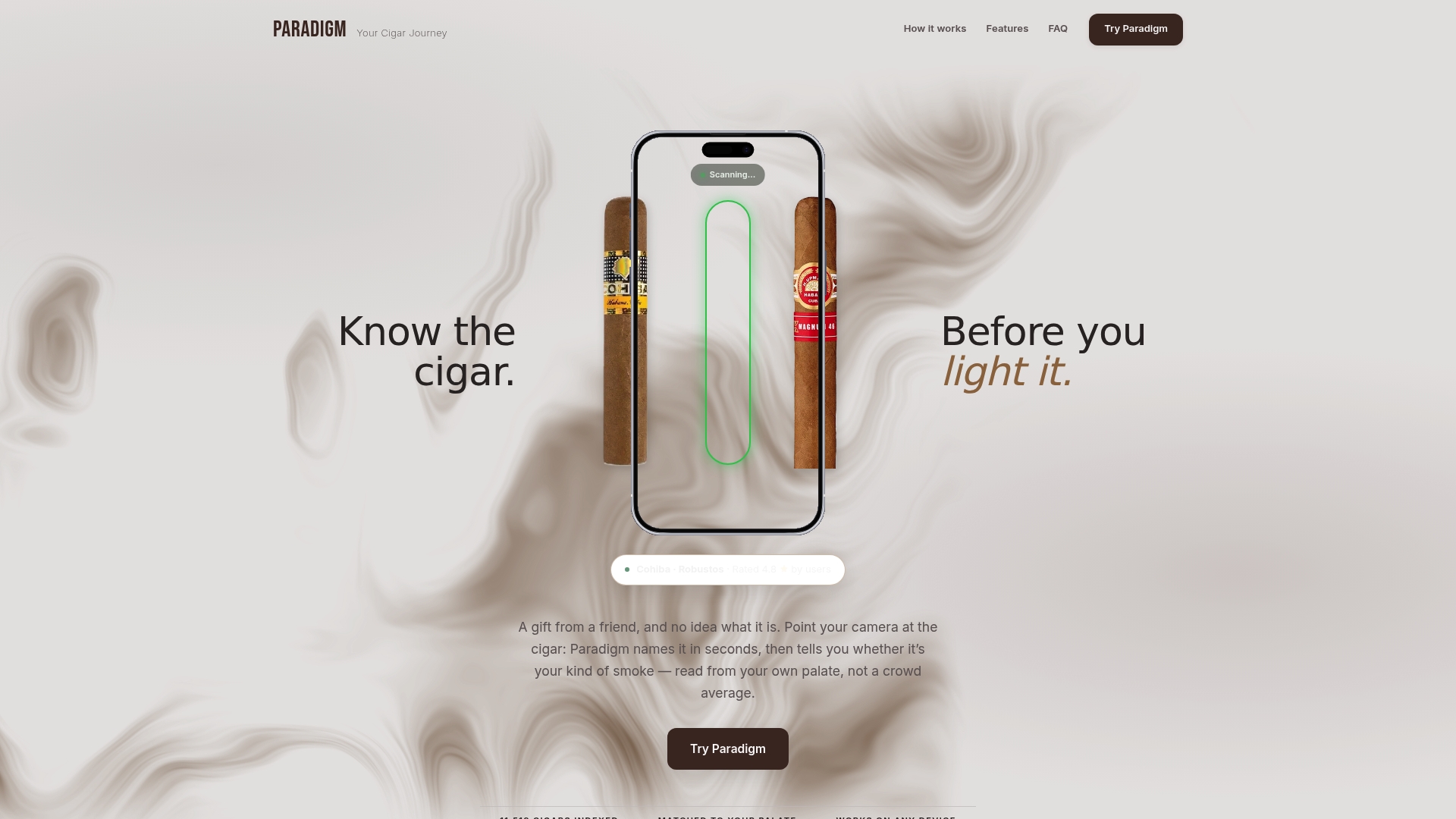
The Tasting Match feature and five-dimension palate profile improve as you log more occasions, so your "after dinner" or "short smoke" filters get sharper over time instead of staying static. Try the five-minute version now: scan and tag three cigars from your current humidor, assign each an occasion, and build one saved list, "short smoke + rating 4+," to test on your next weekday. Since Paradigm runs as a browser-based progressive web app, you can add it to your phone's home screen without downloading anything. Start at Paradigm's cigar journal and build your first occasion tag today.
Sources
- Why a Rotation Beats a Random Pile of Cigars — The Late Smoke
- Cigar Storage Made Simple: Organize Your Humidor
- Cigar Journal App: Log Every Smoke You Try | Contextli
- What to Keep in Your Cigar Humidor | Humidorist
FAQ
How many occasion tags should I actually use?
Keep your active set to a moderate number of tags. More than that turns filtering into its own decision fatigue problem.
What fields are mandatory for an occasion tag to be useful?
Occasion label, date, duration estimate, pairing, and a 1 to 5 rating are the five fields that make a tag searchable and reliable later.
Can an app help me tag cigars by occasion faster?
Yes. Apps let you scan a cigar, add an occasion tag with required fields, and save filtered lists so retrieval takes seconds instead of scrolling through a full history.
Should I tag a cigar at purchase or after smoking it?
Tag at purchase for planning purposes like travel or gifting, then tag again after the first smoke once you know the actual duration and rating.
How often should I review my occasion tags?
Review every 6 to 12 months. Ratings accumulate over time, and a cigar that no longer fits its original tag should get moved or retired from that filter.