Accurate After Dozens of Logs: Strength Based Cigar Picks for Smokers

Strength-based recommendations match a cigar's nicotine delivery to your tolerance and your taste preferences, so you spend less time guessing and more time smoking cigars you actually enjoy. An app like Paradigm builds this match from your palate profile and a scanned cigar's data, then gives you a clear Tasting Match before you light up. The payoff is practical: fewer rough sessions, and a record that shows your progress over time.
TL;DR:
- Cigars vary widely in nicotine delivery depending on size, tobacco content, and smoking style, making strength less predictable based solely on appearance.
- Apps like Paradigm use your declared preferences, tasting notes, ratings, and cigar data to generate personalized strength-based cigar recommendations.
- Building a detailed palate profile through consistent logging over multiple sessions improves prediction accuracy and helps avoid selecting cigars that are too bold for your tolerance.
- Starting with mild to medium cigars and pacing smoking sessions reduces the risk of nicotine-related discomfort or health issues, especially for beginners or those sensitive to nicotine.
- There is no safe level of tobacco use, and nicotine exposure depends heavily on cigar size and inhalation habits, regardless of cigar strength classification.
What "strength" means and why it matters
Strength describes how much nicotine a cigar delivers to your body, not how it tastes. A pepper-forward cigar can be mild in strength, and a smooth, creamy one can hit hard. Most guides sort cigars into mild, medium, and bold bands, though wrapper color alone does not reliably predict which band a cigar falls into, since shade reflects curing and leaf type more than nicotine content.
Several physical factors drive that delivery. Cigar size and tobacco mass matter a lot: most cigars vary widely in tobacco weight, and large cigars can contain the tobacco equivalent of a pack of cigarettes. A single smoke sometimes lasts one to two hours. Wrapper and filler composition, puff frequency, and whether you inhale all shift how much nicotine reaches your bloodstream.
- Mild cigars generally use leaner filler blends and lighter wrappers, producing a gentler nicotine curve.
- Medium cigars balance body and nicotine delivery, which is why many smokers settle there as a baseline.
- Bold cigars pack denser, often darker tobacco and tend to deliver nicotine faster and in larger total amounts over a session.
There is no safe level of tobacco use. Deeper, more frequent inhalation increases nicotine exposure and health risk, a pattern confirmed across cigar smokers regardless of cigar size. If you want a fuller breakdown of how strength, body, and flavor differ, our earlier piece on the topic covers the distinctions in more detail.
How apps turn your preferences into a strength match
A reliable recommendation needs more than a single data point. Paradigm and similar tools draw on several signals at once to figure out whether a cigar fits you:
- Your declared strength preference, set during onboarding and refined as you smoke.
- Tasting notes you log after each cigar, capturing flavor, body, and how the strength felt.
- Star ratings you assign, which weight future matches toward what you actually liked.
- Your smoking history, which shows patterns the app can learn from over time.
- Scan-identified data pulled from a cigar's band, tying your feedback to a specific product in the catalog.
The app organizes this through a palate profile that tracks strength alongside flavor families, body, construction, and finish. Consistent vocabulary matters here: if you call the same cedar note "woody" one week and "earthy" the next, the algorithm has a harder time connecting your preferences across sessions. A structured tasting vocabulary, built on everyday words rather than obscure jargon, speeds up how fast your profile sharpens.
The matching logic itself weighs strength against flavor and format rather than treating strength as the only variable. A cigar can score as a likely match even at a slightly higher strength than your stated preference if its flavor profile closely mirrors cigars you have rated highly.
Pro Tip: Log a tasting note within a few minutes of finishing a cigar, while the finish and nicotine effects are still fresh in your memory.
For more on how this prediction process works before you even light up, see our guide on predicting whether you'll like a cigar.
Setting up Paradigm for accurate strength matches
Getting useful recommendations starts with a few minutes of setup, then gets easier with each cigar you log.
- Open Paradigm in your mobile browser and add it to your home screen as a progressive web app, no download required.
- Build your initial palate profile by answering a short set of questions about your strength preference and flavor leanings.
- Scan a cigar — its band, wrapper, and shape — to pull up its page from a catalog of cigars.
- If the scan doesn't find a match, search the catalog manually by brand or line name.
- Rate the cigar's strength as you experience it, not just as the label suggests.
- Add tasting notes covering flavor, body, and construction while the session is fresh.
- Record context like time of day, pairing, and how you felt afterward, since these details help explain outlier results later.
A "likely" Tasting Match means the cigar's strength and flavor profile closely align with your history. An "unlikely" match flags a mismatch, often in strength, and explains why. If your matches feel off after a dozen or so entries, revisit your stated strength preference rather than assuming the algorithm is wrong. Your palate shifts over time, and the profile should shift with it.
Pro Tip: Rate strength on a relative scale (compared to your last few cigars) rather than an absolute one. It keeps your data consistent even as your tolerance changes.
Choosing strength, pacing sessions, and testing bolder cigars safely
Starting mild and working upward protects you from a rough first experience. Nicotine-related nausea and lightheadedness are common complaints among new or returning smokers who jump straight to a bold blend, and they're avoidable with a little pacing.
- Begin with mild to medium cigars until you have a clear sense of your baseline tolerance.
- Eat something substantial before a session, since smoking on an empty stomach intensifies nicotine effects.
- Slow your puff rate and let the cigar rest between draws, which moderates how much nicotine you absorb per minute.
- Test a bolder cigar in a short session first, stopping at the halfway point if you notice discomfort.
- Pair carefully: strong coffee or spirits alongside a bold cigar can amplify effects rather than balance them.
If you're still working on telling cigars apart by taste rather than just strength, our guide on widening your cigar palate walks through building that skill, and our beginner's cigar primer covers more ground-level safety advice. For a broader look at how nicotine delivery compares across tobacco and nicotine products, this comparison of oral nicotine and smoking is worth a read.
What tracking strength actually taught me

Logging strength consistently changed how I smoke more than any single piece of advice did. Once I had a few dozen entries in my palate profile, the pattern became obvious: most of my rough sessions traced back to picking a cigar bolder than what my mood or time of day called for, not to the cigar itself being flawed.
The palate profile takes patience. Expect a learning curve over your first several logged cigars before the matches start feeling sharp. That stretch of consistent logging is what makes the difference, not any single feature.
— Yaro
Try Paradigm for strength-based Tasting Matches
If you're tired of guessing whether a cigar will suit you before you've already cut it, Paradigm gives you a Tasting Match before you light up, built from your own strength and flavor history rather than a generic chart.
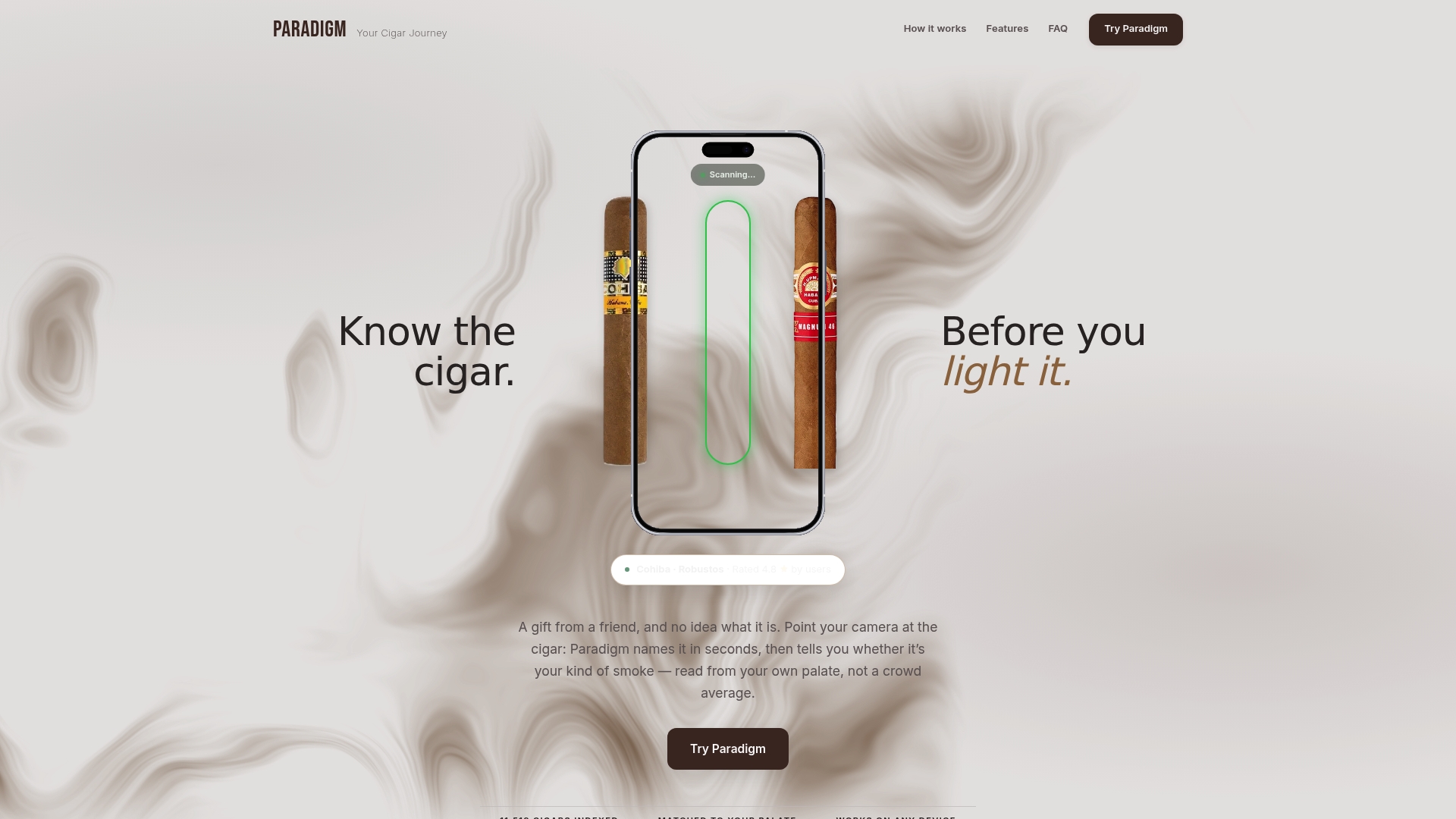
Here's what you get:
- Cigar scanning that identifies a cigar from its band, wrapper, shape, and cap to match it against a cigar catalog, or manual search when scanning doesn't work.
- Tasting Match scoring that tells you whether a cigar is likely or unlikely to suit you, with the reasoning behind it.
- A private, searchable smoking history so you can track what you've tried and how it went.
- A palate profile that sharpens with every cigar you log.
- Full access as a progressive web app, with no native download needed on your phone.
Visit Yourparadigm and add it to your home screen to start building a profile that actually reflects how you smoke.
This article is general information, not a substitute for advice from a qualified doctor. Consult a qualified healthcare professional about your own circumstances before acting on anything here.
FAQ
What does "strength-based recommendations" mean for cigars?
It means a recommendation system matches a cigar's nicotine delivery, not just its flavor, to your personal tolerance and preferences. Apps like Paradigm do this by combining your stated strength preference with your tasting history and a cigar's identified profile.
How is cigar strength different from body or flavor?
Strength refers to nicotine delivery, while body describes the weight and intensity of smoke on your palate, and flavor covers the specific tastes you pick up. A cigar can be light-bodied and mild in flavor while still delivering strong nicotine, which is why Mayo Clinic notes that cigar size and inhalation, not wrapper color, drive exposure.
Is cigar smoking safer than cigarette smoking?
No. Mayo Clinic states plainly that cigar smoking is not a safer alternative to cigarette smoking, and nicotine exposure still depends heavily on cigar size and how deeply you inhale. There is no safe level of tobacco use.
How does Paradigm figure out which cigars I'll like?
Paradigm builds a five-dimension palate profile from your declared strength preference, tasting notes, ratings, and smoking history, then compares that profile against scanned or searched cigars from its catalog. The result is a Tasting Match that tells you whether a specific cigar is likely or unlikely to suit you, along with the reasoning.
Why should beginners start with milder cigars?
Starting mild lets you build tolerance gradually and avoid the nausea or lightheadedness that can come from too much nicotine too quickly. It also gives your palate profile cleaner data to work from, since early sessions set the baseline that later recommendations are measured against.
Sources
These sources back the health and nicotine-risk points made above, and are worth a direct read if you want more detail.
- Cigar smoking and cancer — NCI fact sheet
- Patterns of use, perceptions, and cardiopulmonary health risks of cigar products: a systematic review — Springer Nature
- Is cigar smoking safer than cigarette smoking? — Mayo Clinic