Private Cigar Journal: 7 Point Privacy First Template

A private cigar journal is a searchable record of your smoking sessions that stays off public feeds and review sites, built for your own reference rather than anyone else's. If you want maximum portability and don't mind limited search, a paper notebook works fine. If you want to find a note from eight months ago in ten seconds, a device-only app will serve you better. The rest of this guide gives you a template and a privacy checklist to get started.
TL;DR:
- Private note-taking options range from water-resistant paper notebooks for privacy, to apps that offer quick search, and spreadsheets that balance structure with setup effort.
- Consistent use of a structured template, including metadata, flavor notes, and build-up descriptions for each cigar, sharpens your palate over time.
- Regularly reviewing entries within a month helps identify personal preferences and patterns, with a small vocabulary aiding searchability and comparison.
- Backup and privacy depend on your choice of tool; cloud storage offers convenience but requires encryption checks, while local-only options demand manual exports.
- Paradigm provides a private, searchable browser-based journal with a large cigar catalog, structured tasting notes, and a flavor profile that improves with usage.
Paper, apps, or spreadsheets: which format fits you?
The right format depends on what you value most: privacy, searchability, or structure. Paper notebooks are about as private as it gets since nothing leaves the page, but you can't search them and you risk losing years of notes to water damage or a misplaced bag. Apps solve the search problem and often let you attach photos, but you need to check whether notes stay on your device or sync to a server somewhere. Spreadsheets sit in between: they're structured, exportable, and easy to back up, but setting up columns and formulas takes more effort upfront than either of the other two options.
- Paper: private and tactile, but not searchable and hard to back up.
- Apps: fast to search, often support photos, vary between device-only and cloud storage.
- Spreadsheets: structured and exportable, but require setup time before they're useful.
A smoker who journals twice a month might prefer paper. Someone building a collection of fifty or more reviewed cigars will likely outgrow it fast.
The entry template: what to record every time
A repeatable template is what keeps a cigar journal alive past the first few weeks. Cigar Aficionado's guidance on tasting notes recommends separating your notes by pre-light, lighting, first third, middle third, final third, and finish, with attention to sight, touch, smell, taste, construction, ash color, and burn rate. Use that structure as your default, and expand it only when something stands out.
- Metadata: date, vitola, wrapper color, source (shop or box), price.
- Pre-light: dry draw flavor, aroma off the foot, wrapper feel (oily, toothy, dry), expected strength.
- First third: initial flavor families, draw resistance, burn evenness.
- Middle third: how flavors shift, whether strength builds or levels off.
- Final third: intensity change, any harshness, overall finish.
- Construction: draw, burn line, ash firmness, any plugs or unraveling.
- Overall takeaway: one sentence on whether you'd buy it again.
Optional fields worth adding once the basics are habit: pairing (coffee, rum, nothing), your mood or setting, and humidor conditions using the 135 Rule, where temperature in Fahrenheit plus relative humidity should land near 135, so 70°F and 65% RH works as a quick reference point. Cigar Aficionado notes that the value of a journal comes from linking sensations to future choices, not cataloging every possible flavor, so resist the urge to overbuild the template before you've used it once.
Pro Tip: Keep your final takeaway to one sentence. If you can't summarize a cigar in one line, you probably rushed the middle third.

Using the journal to actually sharpen your palate
A journal only improves your palate if you use it consistently and read it back. Write your first impression before you check the band, the price, or anyone else's rating: Cigar Aficionado's own tasting process relies on blind ratings specifically to avoid bias from brand, price, or origin, and the same discipline works at home. Cover the band, jot your construction and flavor notes, then reveal the cigar and add a short post-reveal reflection on how your expectations shifted your perception.
- Log entries within an hour of smoking, while the details are still fresh.
- Write the blind-first impression before looking up anything about the cigar.
- Run occasional verticals, several vitolas from one line, to isolate what the blend itself contributes versus the format.
- Review your last month of entries every few weeks to spot patterns in what you keep rating highest.
That consistency is the whole point. Cigar Aficionado emphasizes that short, repeatable entries captured in the moment are what separate journals that sharpen a palate from ones that get abandoned after a week. A controlled vocabulary helps too: a small set of consistent flavor-family terms makes entries searchable and comparable without requiring a critic's full descriptor list. If you want a primer on what those flavor families actually mean, our guide to cigar flavor categories breaks down terms like barnyard and baker's spice in plain language.
Privacy and backup: how much exposure are you comfortable with?
Device-only apps and paper notebooks keep your notes private, but they also put the entire backup burden on you. Cloud sync solves backup and cross-device search, at the cost of your data living on someone else's server. Before committing to either, check whether the tool offers a device-only mode, a real export option, and some form of encryption.
- Schedule a monthly export of your entries, even if you never plan to switch tools.
- Keep one encrypted offline copy somewhere other than your phone.
- Test the export once, early, rather than discovering it's broken the day you need it.
Pro Tip: If an app won't let you export your own notes in a plain format, treat that as a warning sign, not a minor inconvenience.
A quick checklist for choosing a journal or app
Test any journal or app against a short list of must-haves before you invest real time in it.
- Entry speed: can you log a session in under two minutes?
- Search: can you find a cigar by name, flavor note, or date later?
- Export and backup: does it let you get your own data out, in a usable format?
- Privacy controls: can you keep entries off public profiles entirely?
- Nice-to-haves: photo capture, label scanning, a palate profile that improves over time, and tagging by flavor or occasion.
Give any candidate a 7 to 14 day trial: log real sessions, then try exporting them and check what, if anything, is shared publicly by default. Our breakdown of what to look for in a cigar tracking app goes deeper on each of these points if you want more detail before deciding.
How Paradigm handles private, searchable journaling
Paradigm is a browser-based cigar journal and discovery app built around a large catalog, with tools for maintaining a private, searchable smoking history rather than a public profile. Users can scan the whole cigar to identify it — band, wrapper, shape, and cap all feed the match — or search the catalog manually, record tasting notes against a structured flavor vocabulary, and rate cigars as they build their history. The app's Tasting Match feature gives a personalized read on whether a cigar suits a user's strength and flavor preferences before lighting up, and a palate profile refines itself as more entries accumulate.

As a progressive web app, Paradigm can be added to a phone's home screen without a native download, which makes it practical for quick entries at lighting and at each third. Applying the blind-first workflow inside the app means logging your construction and flavor notes before checking the Tasting Match or community rating, then comparing afterward.
A small habit that changed how I buy cigars
I started journaling after rebuying the same uninspired cigar twice because I'd forgotten I disliked it. One week of honest entries was enough to spot the pattern. Pick a format this week and log your next three smokes. Consistency matters more than any clever system.
— Yaro
Try Paradigm as your private, searchable cigar journal
Paradigm maps directly onto the checklist above: entries stay private and searchable by date, flavor family, or vitola, tasting notes follow a structured template instead of a blank box, and the catalog of over 11,500 cigars means most scans return a match without manual entry. Because it runs as a progressive web app, you can add it to your phone's home screen and have it open in seconds during your next cigar session.
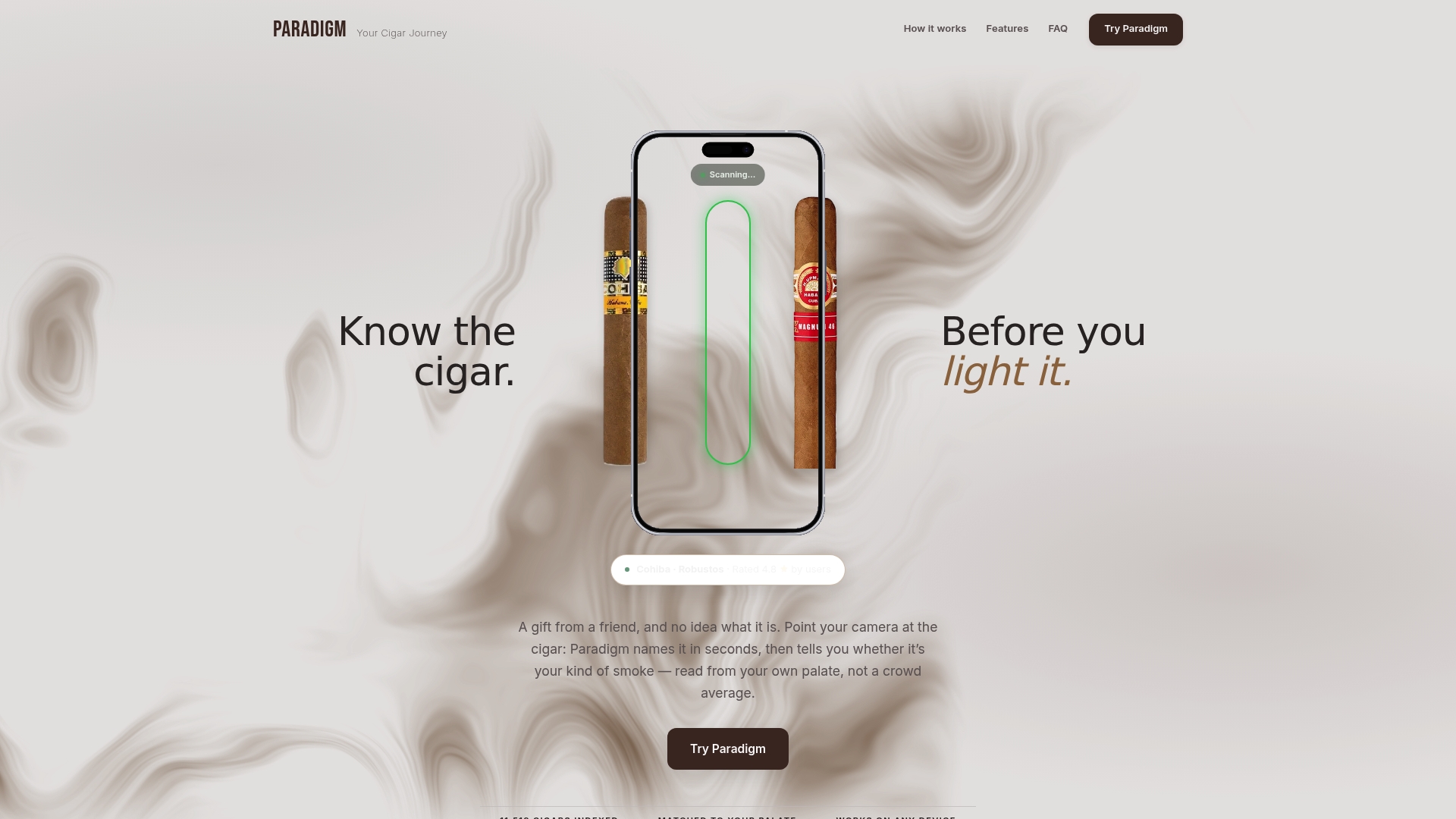
- Private, searchable history instead of a public profile.
- Scanning the whole cigar (band, wrapper, and shape) or manual search against a catalog of over 11,500 cigars.
- A palate profile and Tasting Match that sharpen with each logged session.
If flavor vocabulary is part of what's holding you back from journaling consistently, pairing notes from a resource like this guide to tobacco e-liquid flavor pairing can help widen the descriptive language you bring to your own entries. Try Paradigm free and export a few entries before deciding whether it's your long-term journal.
Sources
FAQ
What is the 135 rule for cigars?
The 135 Rule is a storage guideline stating that temperature in Fahrenheit plus relative humidity should total roughly 135, with 70°F and 65% RH as a common example. It's meant as a quick reference range, generally 133 to 137, rather than a fixed target.
How do I keep a cigar journal?
Use a repeatable template covering metadata, pre-light impressions, notes per third, construction, and a one-line takeaway, recorded within an hour of smoking. Cigar Aficionado's guidance suggests a minimal habit is enough to start: date, cigar identifier, one-line first impression, short per-third notes, and a final takeaway.
What is the Rolls Royce of cigars?
There's no single, universally agreed answer to this, since "best" depends heavily on individual palate and the specific line or vitola in question. Rather than chasing a reputation-based pick, a private journal with blind-first entries helps you identify which cigars actually earn top marks for your own taste.
Can I use a cigar journal app without sharing my data publicly?
Yes, many apps offer a device-only or private mode that keeps entries off public profiles, though you should confirm this before committing. Paradigm, for example, maintains a private, searchable smoking history by default rather than a public feed.
Is owning a cigar lounge profitable?
Profitability for a cigar lounge depends on factors like location, membership model, and local regulation, and isn't something this guide covers with sourced figures. If you're researching the business side rather than personal journaling, that's a separate question from tracking your own smoking history.