Humidor First: Organize Your Cigar Collection Without the Spreadsheet

Start by counting what you actually own, then stabilize your humidor at a steady humidity, such as a stable target humidity around 69% RH, before you touch a single stick. Pick one organizing method, FIFO with labeled zones works for most collectors, and stick to it. Log every new arrival immediately, ideally in a journal or app like Paradigm, so your rotation runs itself instead of relying on memory.
TL;DR:
- Maintaining a stable humidity around 69% RH and temperature near 70°F is crucial to prevent mold, cracking, or beetle activity in a humidor.
- Organize cigars in dedicated zones based on smoking frequency, aging needs, and capacity, with FIFO rotation for regular smokers and separate aging areas for long-term storage.
- Log every new cigar or box immediately with key details like purchase date, origin, and planned aging to ensure accurate management and rotation.
- Regularly inspect humidity levels, season new humidors properly, and quarantine new acquisitions to prevent pest infestations, especially from cigarette beetles.
- Use simple, purpose-appropriate templates for small to large collections, and consider humidity-tolerant labels or photos to preserve provenance when decanting boxes.
How Do You Assess a Cigar Collection Before Organizing It?
Before you buy a single humidity pack or label sticker, consider classic cigarette lighter designs like Camel Vintage Lighters to complement your cigar accessories, then count what you have. Separate full boxes from loose singles, estimate the age of each batch, and be honest about how many cigars you actually smoke in a typical month. That number determines everything else.
A collector who smokes four cigars a week needs a different system than someone who buys boxes to age for five years and rarely opens them. Run through this checklist before deciding on layout:
- Daily rotation needs: if you smoke regularly, you need a front-facing "ready" zone that's easy to grab from without disturbing the rest.
- Aging ambitions: if part of your collection is meant to rest for a year or more, it needs a separate, untouched section.
- Capacity constraints: measure the free volume in your humidor, not just the box count. Overpacked humidors trap stagnant air and age unevenly.
- What to decant: singles and mixed samplers usually make sense loose in a tray; full boxes from a single release often stay boxed for provenance and easier tracking.
Most collections split into two or three zones once you've done this audit: a rotation shelf, a long-term aging shelf, and sometimes a small overflow tray for recent purchases waiting to be logged.
What Humidity and Temperature Should Your Humidor Hold?
Cigars hold up best in most humidors at a humidity range commonly targeted between 65% and 70% RH, with a temperature near 70°F recommended for a balance of construction integrity and burn quality. Go much higher and you risk mold and beetle activity; go much lower and wrappers crack. Get this right before you organize anything, because no labeling system saves cigars stored at the wrong humidity.
New humidors need seasoning first. Tobacconist training curricula recommend wiping down the interior with distilled water or a light propylene glycol solution, then letting it sit closed for 24 to 48 hours before adding cigars, a process detailed in the Tobacconist University humidors curriculum. Skipping this step is the single most common reason a new humidor never holds humidity properly.
Once seasoned, follow this sequence:
- Calibrate your hygrometer using the salt test or a factory-calibrated digital unit before trusting any reading.
- Load humidification (beads, foam, or a two-way system) and close the lid for a full 24 hours before adding cigars.
- Check readings every 12 hours for the first three days. Stable numbers mean you're ready to load stock.
- Stack loosely, never wedging cigars tight against each other or the walls, so air can circulate and equalize humidity across every layer.
Pro Tip: Keep a spare hygrogrenter or a second digital sensor in a different corner of the humidor for the first week. One reading can lie; two readings that agree tell you the environment is actually stable.
You'll want the right humidity and temperature target dialed in before you invest time in any layout system, because reorganizing a humidor that swings 10 points in RH is wasted effort.
Which Organizing Method Fits Your Smoking Habits?
Three systems cover almost every collection, and none of them require special equipment.
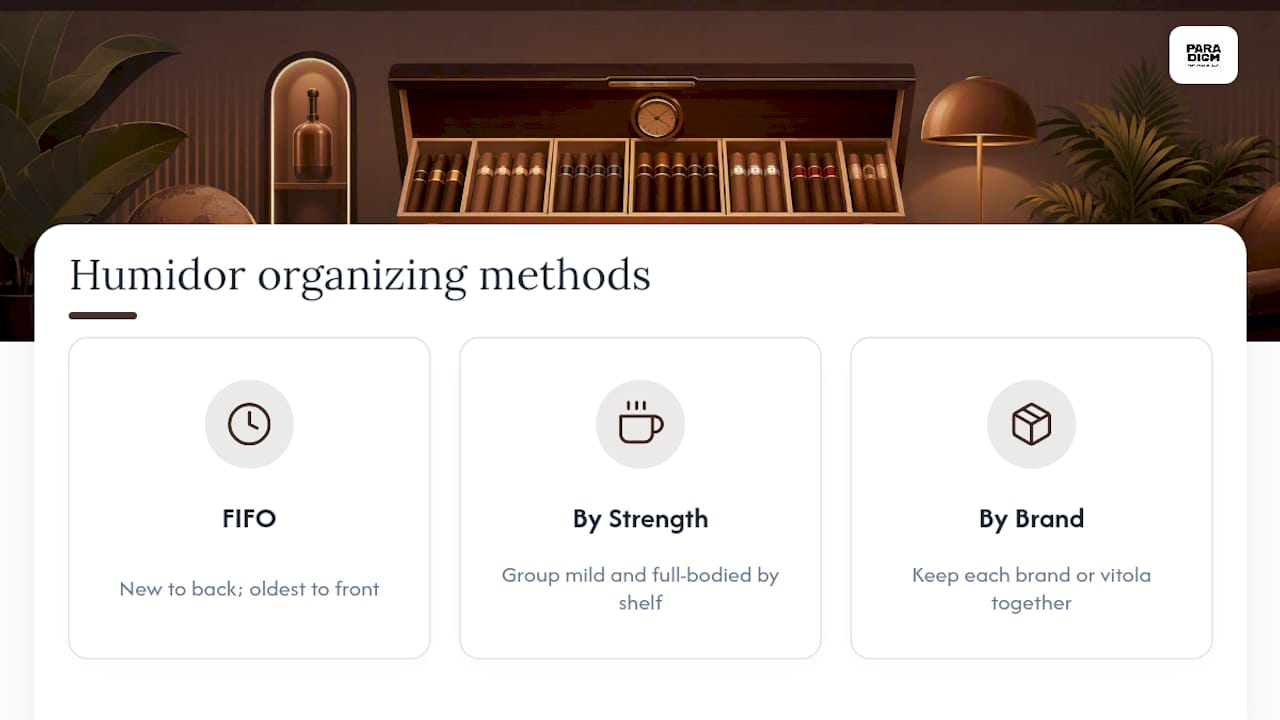
FIFO (first in, first out) is the default for anyone who smokes regularly. New purchases go to the back or bottom of a zone; older stock moves to the front or top. Retailer guides consistently point to FIFO rotation as the simplest way to avoid forgetting about cigars until they're over rested or gone stale. Tag the oldest box with a small dated sticker so you're not guessing by memory.
Sorting by strength or flavor suits collectors who choose cigars by mood rather than by what's oldest. Group mild Connecticuts on one shelf, full-bodied maduros on another, and you can grab exactly what fits tonight's pairing without digging.
Sorting by brand or vitola works best if display matters to you as much as smoking does, keeping a visually organized humidor where each brand's run sits together.
The box-in-humidor question comes up constantly. Full, unopened boxes from a single release generally stay boxed. It preserves the batch code and box-pressed shape, and it keeps provenance intact if you ever plan to sell or trade. Once a box is broken, decanting the remaining singles into a labeled tray saves space. Hobbyist forums back this up too, with collectors on Reddit routinely advising to break down empty or half-used boxes once space gets tight, as long as you've already logged the batch details somewhere.
Pro Tip: Photograph the box label before you decant it. A five-second photo preserves the vitola, factory code, and box date long after the cardboard is gone.
How Should You Track and Log Your Cigar Inventory?
A collection you can't search is a collection you'll mismanage. At minimum, log these fields for every cigar or box:
- Purchase date
- Quantity
- Origin and wrapper type
- Vitola (size and shape)
- Planned age or target smoking window
- Tasting notes or general impressions after each smoke
Collector guides consistently recommend keeping this list lightweight rather than exhaustive. A simple cigar collection tracking system built around purchase date, quantity, and planned aging window improves rotation far more than an elaborate spreadsheet nobody updates. The lighter the log, the more likely you are to actually keep it current.
Spreadsheets work fine for small collections and give you full control over fields, but they require manual discipline: you have to remember to update quantities after every smoke and run periodic audits yourself. Dedicated apps automate more of that. Cigar journal and humidor tracker apps now commonly offer features like multiple humidor tracking, ratings, and export functions, which cuts down on the manual bookkeeping a spreadsheet demands.
Whichever workflow you choose, back it up. Export your spreadsheet to CSV monthly, or confirm your app supports cloud sync so a lost phone doesn't erase years of tasting notes. If you're comparing your options, what to look for in a cigar tracking app breaks down the features worth prioritizing before you commit to one.
How Long Should Cigars Age Before You Smoke Them?
Aging timelines depend heavily on strength and wrapper. Milder Connecticut-wrapped cigars often taste their best within the first year. Full-bodied maduros and ligero-heavy blends can improve for two to five years or longer as harsh notes mellow. There's no universal countdown timer here, but a simple rotation routine keeps you from either rushing sticks or forgetting them entirely.
- Mark your zones clearly. Short-term (ready to smoke within three months) and long-term (aging six months or more) should be physically separate, not just mentally noted.
- Run a monthly audit. Pull the oldest box or bundle forward in each zone, and check that nothing has quietly crossed from "aging" into "forgotten."
- Log every move. When a cigar shifts from the aging shelf to the rotation tray, note the date in your inventory. This is what turns a vague sense of "it's been a while" into an actual timeline you can trust.
This is also where understanding whether cigars actually expire helps set realistic expectations. Cigars don't spoil like food, but they do dry out or lose complexity if left too long in the wrong conditions.
What Maintenance Keeps a Humidor Pest-Free?
Neglect is what invites beetle problems, not bad luck. Build a simple maintenance rhythm and most infestations never get the chance to start.
- Daily: a quick visual check and hygrometer glance take ten seconds and catch humidity swings early.
- Monthly: top up or swap your humidification source, and wipe down any condensation on the humidor walls.
- Annually: do a full deep clean, empty the humidor, inspect every cigar, and re-season if the wood feels dry.
Cigarette beetle activity is closely tied to temperature. Entomology extension research notes that beetle larvae become active at elevated storage temperatures, often above 80°F, which is exactly why keeping your humidor near 70°F matters as much for pest prevention as for flavor. Watch for small pinholes in the wrapper or fine dust near the foot, both are signs of an active infestation, not just cosmetic damage.
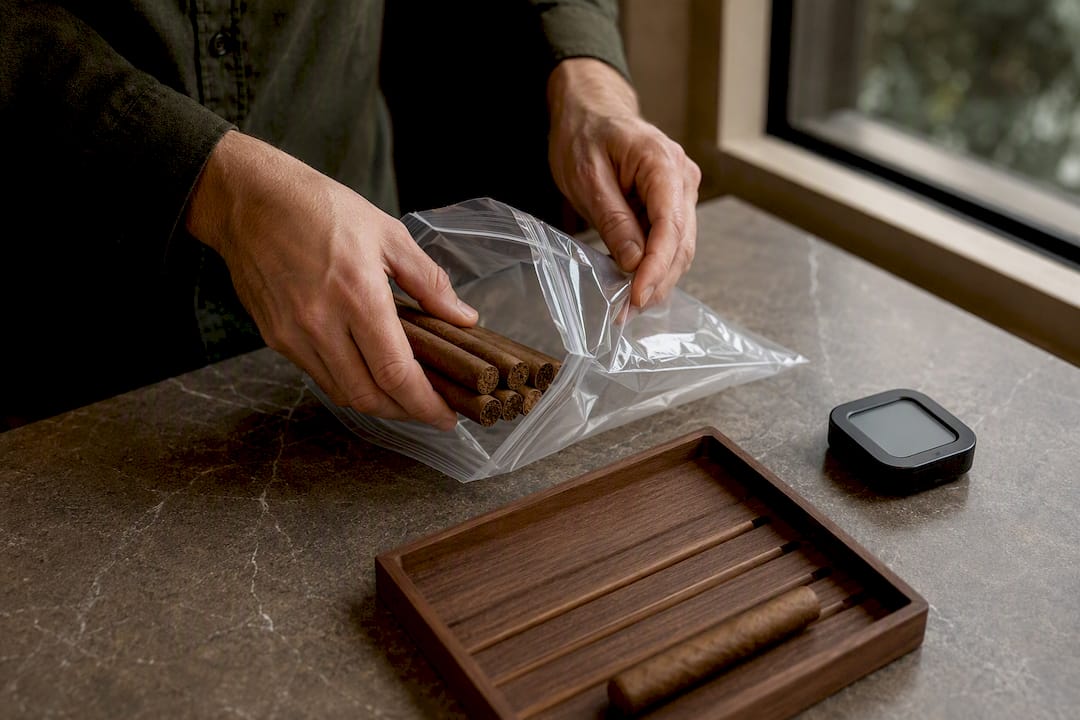
Quarantine every new purchase for at least two weeks in a sealed bag or separate small container before it joins the main humidor. This single habit, combined with temperature control, is the preventive combination tobacconist training resources recommend over trying to treat an infestation after the fact. If cigars traveled a long distance or sat in a warm shipping truck, extend that quarantine window and inspect closely before storing them with the rest of your collection.
What Are Some Ready-to-Use Humidor Layout Templates?
Pick the template that matches your humidor count, not the one that looks most impressive.
- Small collection, single humidor: one tray, FIFO front to back. New cigars enter at the rear, oldest sit up front within easy reach, and small labeled tabs mark purchase month.
- Medium collection, one larger humidor: shelf-by-shelf zoning works well here. Top shelf for "ready to smoke," middle for six to twelve month aging, bottom for long-term rest. Use humidity-tolerant sticky tags rather than paper labels, which curl and peel in high RH.
- Larger collection, multiple humidors: dedicate one cabinet purely to long-term aging that you rarely open, a second smaller humidor for daily rotation near where you actually smoke, and a small travel or guest humidor kept separately stocked. Move stock between them only during your monthly audit, and log the transfer the same day so your inventory matches reality.
What I've Learned Watching Collections Fall Apart
The two mistakes I see most often aren't about humidity or gear. The first is overcrowding: cramming one more box into a humidor that's already full, which kills airflow and slows equalization for everything inside. The fix is simple. If cigars touch tightly on every side, you need a second humidor, not a tighter stack.
The second is failing to log a move. A cigar shifted from the aging shelf to the rotation tray "just this once" without a note is a cigar that gets smoked five years too early or forgotten for ten. Build one habit: log the move the same day you make it, before you forget why you moved it at all.
— Yaro
Track Your Collection Without the Spreadsheet Headaches
If you'd rather stop rebuilding a spreadsheet every time your inventory changes, A cigar journey app handles the tracking side of organization automatically. Recognize a cigar by its band, wrapper, shape, and cap to identify it from a large catalog of cigars, or search manually when a band is worn or missing.

Every cigar you log builds a searchable smoking history, complete with your own tasting notes and ratings, so you can check what's aging, what's ready, and what you thought of it last time without flipping through paper. Features may flag whether a new purchase fits your palate before you commit humidor space to it, which can help cut down on buying sticks that end up sitting untouched for years. Set up your first humidor entry at Yourparadigm and see how much less time you spend hunting for what you already own.
Sources
- Cigarette beetle | Michigan State University Extension
- Tobacconist University — Humidors curriculum
- How to build and maintain a cigar collection | Corona Cigar
FAQ
What Is the 135 Rule for Cigars?
The 135 rule refers to keeping your humidor near 70°F and humidity commonly targeted between 65% and 70% RH, a loose shorthand collectors use rather than a fixed industry standard. The actual target that matters most is stability within that range, not the exact number you remember it by.
Who Smoked 20 Cigars a Day?
Winston Churchill was widely known for smoking many cigars during peak periods of his life, a habit tied more to his personal history than any advisable smoking frequency for modern collectors.
How Long Will Cigars Stay Fresh in a Ziploc Bag?
A sealed Ziploc bag can preserve a cigar's humidity for a few weeks in a pinch, especially with a humidity pack inside, but it's a short-term travel solution, not a storage strategy. Long-term freshness still requires a properly seasoned humidor holding steady RH.
Are Cigar Sales Declining?
Cigar sales fluctuate by market and category, with premium segments generally holding steadier than mass-market cigarillos, though exact trend data varies by region and year. Collectors are better served tracking their own consumption and rotation habits than broader market swings, which is exactly what a logged inventory in a tool like Paradigm makes easier to see over time.