Collectors: Scan, Sample, Log Before You Buy Limited Edition Cigars
Limited edition cigars are worth it if you value a documented aging program, a genuinely novel blend, or a story tied to a specific milestone. They're a poor bet if you're chasing resale profit or buying on hype alone. Releases like a limited-edition anniversary puro or a high-primed, aged limited release reward smokers who care about scarcity and craftsmanship, not speculators. The comparison and buying checklist below will help you distinguish before you spend $200 on a box.
TL;DR:
- Verifiable aging claims and published production numbers are essential indicators of a truly limited release worth investing in.
- Differentiating factors such as new primings, farm sources, or specific fermentation steps justify higher prices and better aging potential.
- Confirm authenticity by checking brand disclosures, high-quality band details, and avoiding steep markups without critic reviews.
- Expect limited editions with genuine scarcity to have small production runs, often between 5,000 and 25,000 boxes, with documented aging programs.
- Buying a single stick to test flavor, construction, and fit with your palate provides better insight than relying on hype or marketing claims.
Are Limited Edition Cigars Worth It? A Side-By-Side Look
Not every "limited" release deserves the label, and not every one deserves your money. Some brands publish exact box counts and multi-year aging documentation. Others slap a special band on a standard blend and call it exclusive. Sorting the two apart starts with looking at what each house actually discloses.
The releases below appear across major cigar retailers, collector forums, and critic reviews for a reason: they either publish real production numbers, run a documented aging program, or both. A few, like one widely reviewed anniversary-edition doble diamante release, made headlines specifically because reviewers questioned whether the price matched the smoke.
| Release | Production / Allocation | Price Tier (per stick) | Best For | Standout Feature | Aging Intent |
|---|---|---|---|---|---|
| Legacy marque anniversary perfecto (25th edition) | Limited allocation, not fully published | $$$$ | Collectors of classic releases from this marque | Brand legacy, strong secondary demand | Built to age, minimal public documentation |
| Legacy marque anniversary tribute blend | Small anniversary allocation | $$$$ | Enthusiasts of this anniversary line, anniversary collectors | Anniversary blend, collectible packaging | Designed for cellaring |
| Legacy marque limited special-run blend | Limited special run | $$$ | Fans of nuanced blending from this marque | Distinctive core blend, factory provenance | Moderate aging potential |
| Family-owned marque's annual zodiac release | Annual themed release, limited | $$$ | Collectors of yearly zodiac releases | Year-specific leaf selection and packaging | Designed for near-term enjoyment |
| Boutique Nicaraguan puro, small run | Small boutique run | $$ to $$$ | Fans of boutique Nicaraguan puros | Cult house character, genuine scarcity | Variable, house-dependent |
| Boutique Nicaraguan farm-specific batch | Limited specialty batch | $$ to $$$ | Smokers who want farm-specific Nicaraguan profiles | Farm-grown leaf, blend experimentation | Short to medium term |
| Aging Room La Boheme | Limited, higher-end | $$$$ | Collectors who prioritize refinement and presentation | Refined balance, premium packaging | Built for cellaring |
| Family-owned marque's ultra-short annual vitola | Ultra-short annual run | $$$ | Collectors of unusual vitolas | Uncommon short vitola, tight allocation | Short window, drink fresh |
| Family-owned marque's premium aged blend | Premium limited | $$$$ | Aficionados seeking aging-friendly blends | High-primed tobacco selection | Strong aging design |
| The Tabernacle Knight Commander Perfecto | Boutique limited | $$$ | Collectors of boutique perfecto shapes | Distinctive perfecto vitola | Moderate, boutique-dependent |
| Las Calaveras Edición Limitada 2025 | Festival-tied annual limited | $$$ | Collectors following festival releases | Festival/anniversary tie-in | Short to medium term |
For context on how small a "small" run can be, Cavalier Genève's 2026 limited edition shipped in just 1,948 boxes worldwide, 19,480 cigars total, yet still carried a modest MSRP near $16.70 per stick. Compare that to Villa Casdagli's Edición Limitada, capped around 6,000 cigars a year and built around an extended "mejorado" fermentation process the brand actually documents. Scarcity alone doesn't set the price; documented process often does.
A few notes worth carrying into your own shopping list:
- This anniversary line's releases trade on brand equity more than published numbers. The marque rarely discloses exact counts, so secondary market pricing runs on reputation and buzz, not verified scarcity.
- This family-owned marque's premium and short-run limited series lean on high-primed leaf and documented aging focus, which is the kind of detail worth confirming before paying a premium.
- Boutique Nicaraguan-puro runs reward palate curiosity more than collection value. Buy a single before committing to a box.
- The Tabernacle Knight Commander Perfecto is a shape play as much as a blend play. If you don't already like perfectos, the vitola alone won't win you over.
- Las Calaveras 2025 ties its appeal to a festival calendar. Once the season passes, demand tends to cool, so don't assume lasting resale strength.
How Do You Know If a Limited Release Is Worth the Premium?
Run through this checklist before you buy a box, not after:
- Check for verifiable aging claims. A named program, like Reserva (5+ years) or Gran Reserva (10+ years), means something. A vague "extra aged" sticker on the box means very little on its own, as Cigar & Cocktail Magazine points out.
- Look for published production numbers. Most credible limited runs fall somewhere between 5,000 and 25,000 boxes. If a brand won't say how many boxes exist, treat the "limited" label skeptically.
- Ask what's actually different in the blend. New primings, a new farm, or a new fermentation step are real differentiators. A new band on an old blend is not.
- Test the construction. Even a beautifully aged filler falls apart with a bad roll. Check draw and burn on a single stick first.
- Compare the MSRP to the brand's core line. If a limited release costs three times more than the house's flagship smoke, ask what specifically justifies that gap.
Once you've confirmed the blend is different and the story checks out, watch for diminishing returns. Paying more rarely buys proportionally more flavor once you clear a certain price ceiling, which the next section covers directly.
Pro Tip: Buy one stick before you buy a box. A $12 sample tells you more about whether a limited release fits your palate than any marketing copy ever will.
How Do You Verify Authenticity and Protect Your Investment?
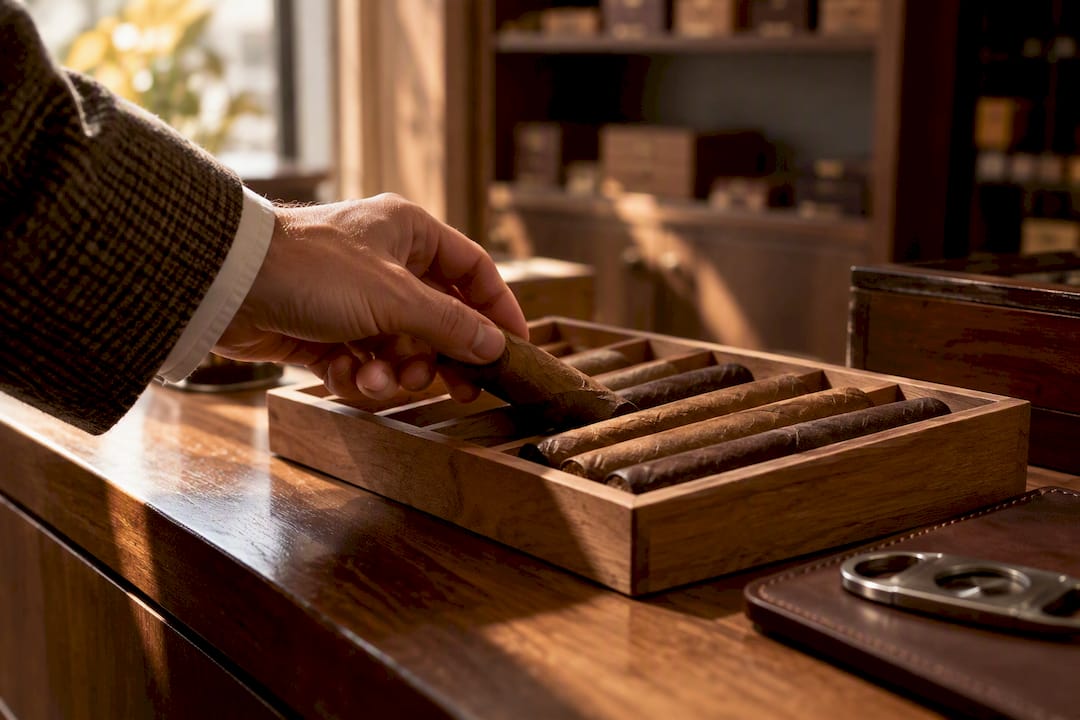
Start with the source, not the secondary market. Manufacturer press releases, listings from Habanos-authorized Casas del Habano, and reviews from established critics like HalfWheel or Cigar Aficionado are the most reliable places to confirm real production numbers and aging claims. If a retailer's description contradicts what the brand itself published, that's a red flag worth chasing down before you buy.
Watch for these warning signs on any "limited" release:
- No published vintage, harvest year, or aging duration anywhere in the marketing.
- Band artwork that looks slightly off compared to verified retailer photos. Counterfeiters frequently get fine band details wrong, which is why comparing high-resolution scans against manufacturer images is a fast, effective check.
- A steep markup with little or no coverage from major critics, which usually signals hype outpacing substance.
Storage matters just as much as verification. Many limited-edition runs land in the 5,000 to 25,000 box range industry-wide, and even the best-aged blend degrades fast in a poorly maintained humidor.
Does a Higher Price Mean Better Quality or Resale Value?
Higher price often means better tobacco selection, but not always better resale value, and rarely a reliable investment. The 1935 Anniversary Edición Doble Diamante Red, from a major heritage marque, shipped in a run of 5,000 cigars (250 boxes of 20) at a steep MSRP, yet critics were split on whether the flavor matched the price tag. Contrast that with La Aurora's Preferidos No.1, priced around $40 a stick, where the historical story and bespoke vitola landed well with reviewers.
A few pricing realities worth internalizing:
- Allocation scarcity tends to spike secondary prices short term, right after release, then flatten once the initial rush fades.
- Long-term appreciation is possible but slow and far from guaranteed, even for well-regarded releases with genuine scarcity.
- Industry commentary suggests that once a stick clears roughly $25, additional flavor gains often shrink relative to the price increase, and a well-made core-line cigar frequently delivers more consistent enjoyment per dollar.
Treat any limited edition purchase as buying an experience first. Financial upside, if it happens at all, is a bonus, not the plan.
How Do You Reduce the Risk of Buying the Wrong Box?
The smartest move before spending $150 on a limited box is confirming the blend actually fits your palate. Paradigm Your Cigar Journey's catalog covers more than 11,500 Cuban and New World cigars, so you can scan the cigar — band, wrapper, shape, and cap — the moment you pick up a single stick and pull up crowd and critic notes instantly.
Here's a workflow worth adopting for any limited release you're considering:
- Scan the cigar — band, wrapper, and shape together — to confirm you're holding the actual release, not a similar-looking variant.
- Log a tasting note on the single before committing to a box, capturing strength, flavor, and construction while it's fresh in memory.
- Check your Tasting Match score against the blend's profile before deciding it's worth the premium.
- Review your searchable smoking history to see if you've already tried something similar from the same house.
Pro Tip: A palate profile that improves with every logged cigar catches mismatches a marketing page never will. If your notes show you consistently rate high-primed, full-bodied blends lower, skip the $200 box even if the reviews are glowing.
When Does the Splurge Actually Make Sense?
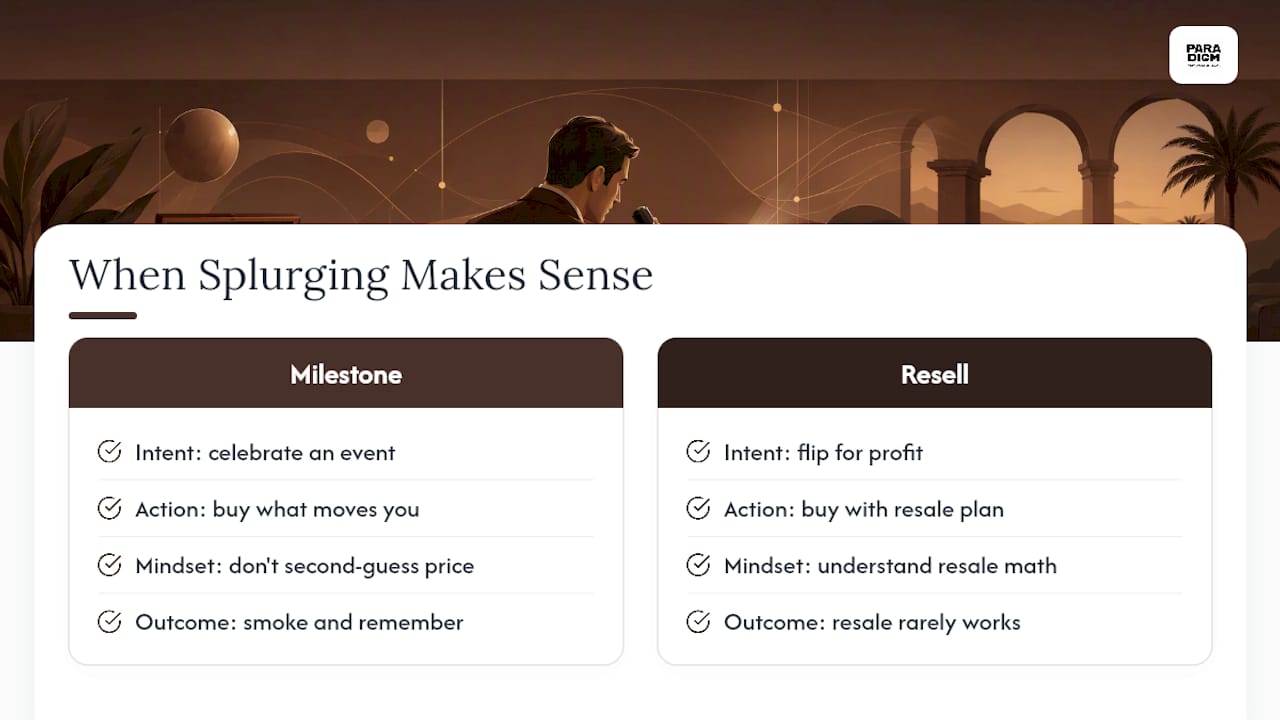
Not every limited release needs a spreadsheet. Some purchases are about marking an anniversary, a birth, a promotion, or a friendship, and that's a legitimate reason to spend more than the blend alone would justify. The distinction that matters is intent: buying to smoke and remember versus buying because you hope to flip it later.
Match your purchase to your actual goal. If you're buying for a milestone, buy what moves you, and don't second-guess the price. If you're buying to resell, understand that most limited cigars are enjoyed, not hoarded, and the resale math rarely works out the way collectors hope.
— Yaro
Track Every Sample Before You Commit to a Box
A cigar journal app lets you scan a cigar — band, wrapper, shape, and cap — in seconds, review a Tasting Match against your own palate profile, and assess whether a limited box is worth it before buying a single stick.
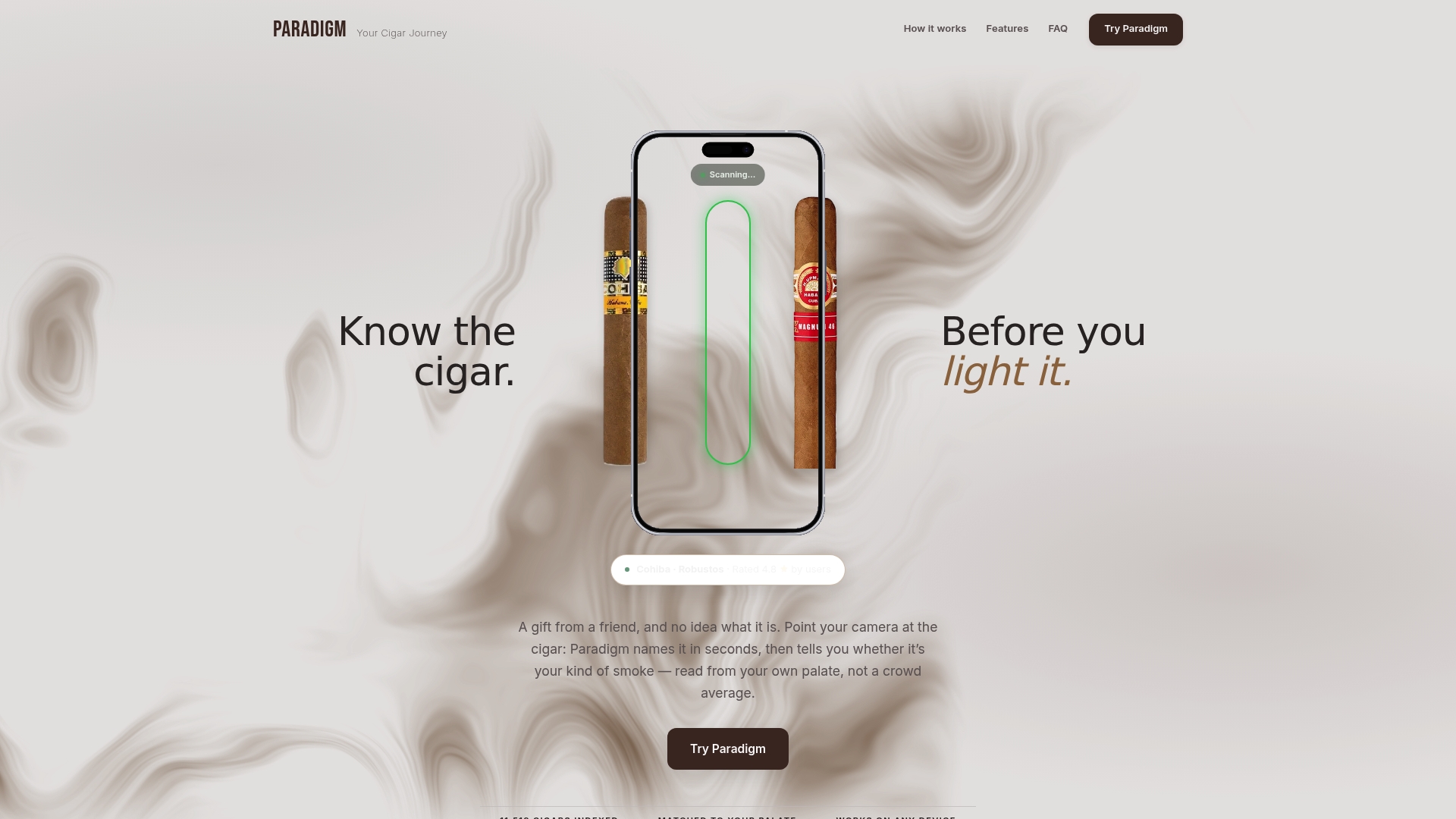
Because the catalog covers more than 11,500 Cuban and New World cigars, you're rarely stuck manually searching for an obscure boutique release like a short-run family-marque vitola or a boutique Nicaraguan puro. Log a tasting note on the single you sampled, check it against your five-dimension palate profile, and let your searchable smoking history flag whether you've already tried something similar from the same house. It runs as a browser-based app, so there's nothing to download, and your notes sync to the cloud automatically. Before your next limited release purchase, start building your cigar journal and see your Tasting Match score before you spend a dollar.
Where to Verify Production Numbers and Reviews Yourself
- Cavalier Genève's product listing confirms exact box counts and per-stick MSRP for the 2026 limited edition.
- Oxford Cigar Company's Villa Casdagli page documents annual production limits and fermentation details.
- HalfWheel's Doble Diamante Red review breaks down production numbers and critical reception.
- Cigar & Cocktail Magazine's buying guide explains aging program terminology and typical production ranges.
- The Late Smoke's analysis frames limited editions as experience purchases rather than investments.
Sources
- Cavalier Genève Limited Edition 2026 | Mardo Cigars
- Villa Casdagli Edición Limitada • Oxford Cigar Company
- 1935 Anniversary Edición Doble Diamante Red — HalfWheel
- Limited editions: what they are and how to buy them — Cigar & Cocktail Magazine
- Regional editions & limited releases: worth it or just marketing? — The Late Smoke
FAQ
What Is the "135 Rule" for Cigars?
The core idea stays the same regardless of the exact figures you've heard: keep humidity and temperature both in that moderate range to avoid drying out your cigars or triggering mold.
Are Limited Edition Cigars a Good Investment?
Generally, no. Industry analysts recommend treating limited editions as experience purchases rather than financial investments, since resale appreciation is slow, uncertain, and depends heavily on scarcity holding up over years, not months.
Is Smoking Two Cigars a Day a Lot?
Two full cigars a day is on the heavier end for most smokers, especially with fuller-bodied blends, and it adds up in both cost and nicotine exposure over time. Most enthusiasts space out heavier smokes and reserve premium or limited releases for occasional enjoyment rather than daily rotation.
Should Beginners Buy Limited Edition Cigars?
Beginners are usually better off learning their palate on core-line cigars before spending $150 or more on a limited box. Without a clear sense of preferred strength and flavor, it's easy to overpay for a blend that doesn't actually suit you, which is exactly the kind of mismatch a palate profile is built to catch.
How Can I Tell If a Limited Release Will Age Well?
Look for documented Reserva or Gran Reserva aging programs, high-primed tobacco selection, and extended fermentation details, all signals that a brand designed the blend for cellaring rather than just marketing scarcity. Vague "extra aged" claims without published vintages or timelines deserve real skepticism.
Recommended
- Which cigar-tracking app should I use?
- What should I actually look for in a cigar journal or humidor tracking app?
- How accurate is AI-based cigar recognition, and why do photo-ID scanners often get it wrong?
- How do I deliberately get better at telling cigars apart instead of everything tasting the same?