Leathery Cigars: Taste and Track Them Using the 45–60 Second Puff Rule
Leathery cigars deliver a tasting note that reads as chewy, tannin-rich, and animal in character, often compared to a saddle, a well-worn baseball glove, or a tack room. The note typically shows up in cigars with dark wrappers like Maduro, Oscuro, or Mexican San Andrés, and in blends built from aged Nicaraguan tobacco. Examples like an aged-filler Nicaraguan natural-wrapper blend and a Nicaraguan Maduro blend are notable cases showing leather notes.
TL;DR:
- Dark wrapper cigars like Maduro, Oscuro, and San Andrés are most likely to develop a leathery tasting note due to heavier fermentation and longer curing processes.
- Leather on the palate appears as a dry, chewy, tannin-rich texture that is best identified when slow smoking and using retrohale to detect its aroma.
- Shape influences leather's timing, with tapered cigars like torpedoes showing the note earlier, while large ring gauges often reveal leather later in the smoke.
- Not all dark wrappers guarantee leather, as origin, fermentation, and curing methods significantly affect whether a cigar exhibits this note.
- Building a personal log of cigars that read as leathery improves recognition and offers a more reliable way to select similar cigars in the future.
What "Leathery" Actually Means on the Palate
Leather isn't a flavor you taste so much as a texture you feel. Reviewers describe it as a chewy, tannin-like grip on the tongue paired with an aroma closer to a tack shop than a kitchen: think saddle leather, old book bindings, or a worn baseball glove left in a hot car. It's dry rather than sweet, and it tends to sit low in the mouth rather than up front.
Genuine leather rarely travels alone. It usually shows up with coffee, cocoa, cedar, or earth, and those companions matter because they help confirm you're tasting leather and not something else entirely. An aged-filler Nicaraguan natural-wrapper blend is a textbook case: reviewers consistently note cocoa, earth, and coffee up front, with cedar and leather developing in the second third.
Here's the trap most new smokers fall into: they mistake harsh, hot smoke for leather because both feel heavy and aggressive on the palate. Real leather has a rounded, almost creamy edge underneath the grip. Harshness from over-fast puffing feels sharp, dry, and one-dimensional, with no depth behind it. If a cigar tastes rough and nothing else, slow down before you write it off as bad tobacco.
Cigars Known for Leather Notes: A Tasting Shortlist
These examples come up again and again in reviewer notes and tasting guides, and each one shows leather through a slightly different lens.
- An aged-filler Nicaraguan natural-wrapper blend. Cocoa, earth, and coffee dominate the first third, then leather and cedar move in during the second third. The filler tobacco is aged for several years, which smooths the leather note instead of letting it turn sharp.
- A Mexican San Andrés-wrapped torpedo. Built on a Mexican San Andrés wrapper, this stick lists cocoa, espresso, and leather right in its own tasting profile. The torpedo shape concentrates the smoke, so leather arrives earlier than it would in a straight parejo.
- A Nicaraguan Maduro blend. The Maduro wrapper over aged Cuban-seed Nicaraguan filler produces coffee, cocoa, earth, and leather that stays rich without turning muddy, a common complaint with cheaper maduros.
- A double-barrel-aged blend. Reviewers pick up creamy leather on the cold draw itself, with oak, cocoa nibs, and raisin sweetness filling in around it by the second third.
- Two boutique blends with a softer leather profile. Both show up repeatedly in tasting guides for pairing leather with nutty and cream notes, a slightly softer take on the profile than the darker maduros above, according to tasting notes from Small Batch Cigar.
- A thin-ring lancero and a Connecticut Broadleaf-wrapped perfecto. The lancero's thin ring gauge concentrates flavor fast, while the perfecto's Connecticut Broadleaf wrapper over San Andrés binder lets dark chocolate and espresso lead before leather closes out the profile late.
None of these run expensive by premium standards, and most work fine as an everyday smoke rather than a special-occasion splurge.
Why Leather Shows Up: Wrappers, Fermentation, and Shape
Dark wrappers are the biggest predictor of leather. Maduro, Oscuro, Connecticut Broadleaf, and Mexican San Andrés all go through heavier fermentation and longer curing, and that process breaks down sugars while concentrating tannins and other compounds that read as leathery on the palate.
Origin plays a role too. Nicaraguan tobacco, especially from regions like Estelí and Jalapa, tends to carry a tannic, almost animal character even before fermentation darkens the leaf further. Mexican San Andrés brings a similar quality, which is exactly what shows up in the San Andrés-wrapped torpedo's wrapper profile.
Shape changes the timing. A tapered head, whether torpedo or perfecto, forces smoke through a narrower channel and concentrates flavor faster, which is why leather tends to arrive earlier in a tapered torpedo like the one mentioned above than it would in a wide, straight-sided robusto built from the same tobaccos. Large ring gauges do the opposite: they let heat build gradually, so leather tends to unfold later and more slowly, often not until the second or third.
How to Taste for Leather Without Missing It
Finding leather reliably comes down to slowing down and paying attention to a few specific moments in the smoke.
- Slow your cadence. Aim for one puff every 45 to 60 seconds. Faster pacing overheats the smoke and buries subtle notes like leather under raw heat.
- Use retrohale. Draw smoke into your mouth, then exhale gently through your nose. This routes aroma past your olfactory receptors directly, which is often the only way to catch leather's dry, tannic edge.
- Track the thirds. Note what you taste in the first inch, the middle third, and the final third separately. Leather often stays quiet early, builds through the middle, and either intensifies or fades by the end, as seen in how an aged-filler Nicaraguan natural-wrapper blend develops it in the second third.
- Rule out construction problems. A tight draw, an overhumidified cigar, or a canoeing burn can all mask leather under bitterness. If something tastes off and flat, check your burn and draw before blaming the blend.
Pro Tip: If you're not sure whether you're tasting leather or just heat, pull the smoke out on retrohale and let it sit in your nasal passage for a second before exhaling. Heat dissipates fast; leather lingers.
What to Drink and Eat Alongside a Leathery Cigar
Leather pairs best with drinks that carry their own oak or char, since the two reinforce each other instead of competing. Bourbon and aged rum work well for this reason, and reviewers frequently reach for a peated scotch alongside Maduro-wrapped cigars specifically because the smoke echoes the leather's tannic weight.
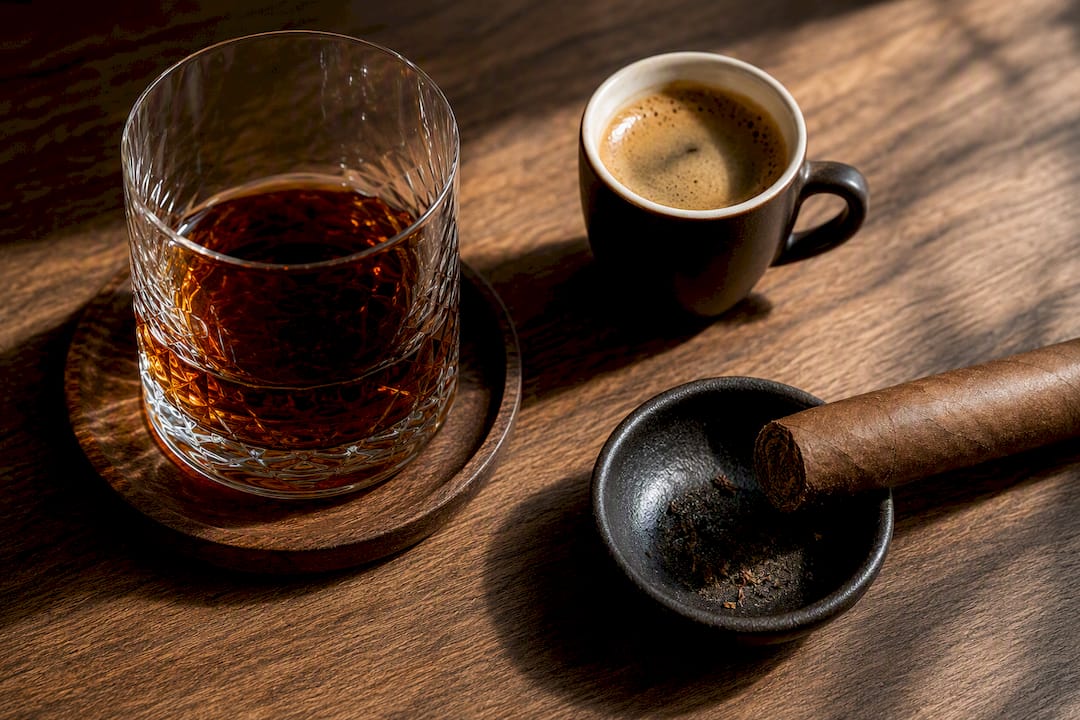
Espresso and robust porter both work as non-alcoholic or beer options, especially earlier in the day. Use a rocks glass rather than a snifter for spirits, take small sips between draws rather than sipping constantly, and let a freshly cut cigar rest for a minute before the first light. That short pause lets the cut settle and keeps the draw from running hot right out of the gate.
Finding and Logging Leathery Cigars With Paradigm
Working through a list of names is a starting point, but building your own record of what actually reads as leathery to you is what sharpens your palate long term. Its catalog covers a large number of Cuban and New World cigars, and a Tasting Match feature flags sticks likely to lean leather-forward based on your own flavor profile. You can log tasting notes by third, attach photos, and revisit entries later to see how a blend's leather note shifted with age. For more on how flavors shift across a smoke, Paradigm's guide to why cigars change across the three thirds is worth a read.
The Chemistry Behind Leather in Tobacco
Leather notes trace back to a combination of tannins and phenolic compounds that concentrate in tobacco leaves during fermentation and aging. Tannins are the same class of compound found in strong tea and red wine, and they're responsible for that dry, mouth-gripping sensation reviewers describe as chewy or tack-like. Darker wrappers accumulate more of them because longer fermentation and hotter curing break down the leaf's sugars while leaving tannins largely intact.
Maillard-type reactions during curing and fermentation also contribute. These are the same browning reactions that give roasted coffee and seared meat their depth, and in tobacco they produce a range of aromatic compounds that read as earthy, roasted, or animal in character. High-priming leaves, which grow near the top of the plant and absorb the most sun, tend to carry a heavier concentration of these compounds than leaves from lower on the stalk, which is part of why premium blends often use top-priming leaves specifically for wrapper or filler when a bolder profile is the goal.
Nicotine and sugar content matter too, though indirectly. A leaf with lower residual sugar and higher nicotine, common in longer-fermented dark tobaccos, tends to produce a drier, more tannic smoke overall. That dryness is what makes leather register as a texture as much as a flavor. None of this is something you can control at the retail counter, but knowing that dark wrapper plus long fermentation equals a higher likelihood of leather gives you a real shortcut when you're scanning a humidor shelf.
Common Misconceptions About Leathery Cigars
The biggest misconception is that leather and strength are the same thing. They're not. A mild-bodied cigar can carry a distinct leather note if the wrapper and fermentation support it, while a full-bodied cigar can skip leather entirely and lean into pepper or spice instead. Strength measures nicotine impact; leather is a flavor category. Confusing the two leads people to avoid leathery cigars because they assume every one will hit hard, when plenty don't.
A second misconception is that leather only comes from Maduro wrappers. Maduro is a strong predictor, not a guarantee. The Connecticut Broadleaf-wrapped perfecto mentioned earlier uses a Connecticut Broadleaf wrapper over a San Andrés binder, and its leather note doesn't fully emerge until the later thirds, well after the cigar has already shown dark chocolate, earth, and black pepper. Wrapper color is a clue, not a rule.
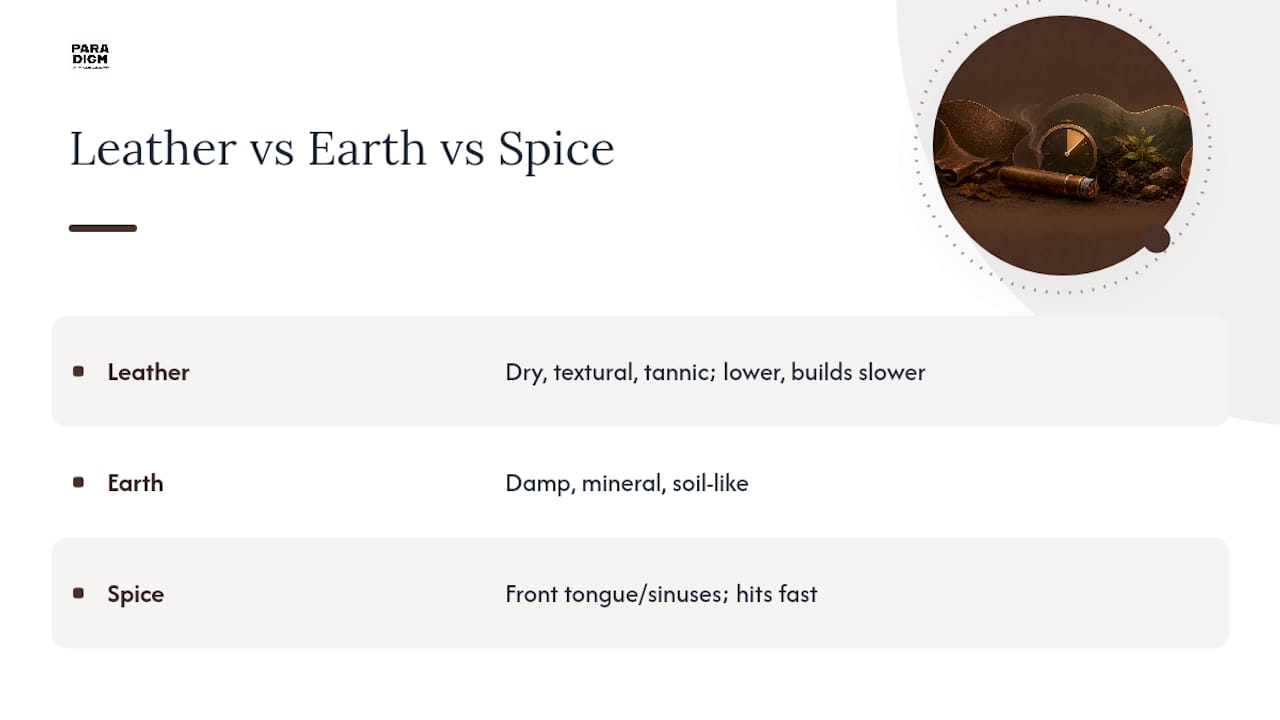
The third mistake is treating leather and earth as interchangeable. Earth reads as damp, mineral, almost soil-like. Leather is drier and more textural, with that tannic grip. Spice notes, meanwhile, hit the front of the tongue and sinuses fast; leather sits lower and builds slower. Tasting all three side by side, ideally in a single session, is the fastest way to stop mixing them up.
Training Your Palate to Recognize Leather
Taste is personal, and what reads as leather to one smoker might land as plain earth to another. The fix isn't more theory. It's repetition, logged consistently, ideally in an app like Paradigm so you can compare sessions side by side. Pick one cigar from this list and see where your notes land.
— Yaro
Try Paradigm to Discover Your Next Leathery Cigar
Reading tasting notes only gets you so far. This app turns your own sessions into searchable data, scanning a cigar's band, wrapper, and shape to pull up its profile from a large catalog of Cuban and New World options, then flagging whether it's a likely Tasting Match based on your recorded preferences rather than a generic star rating.
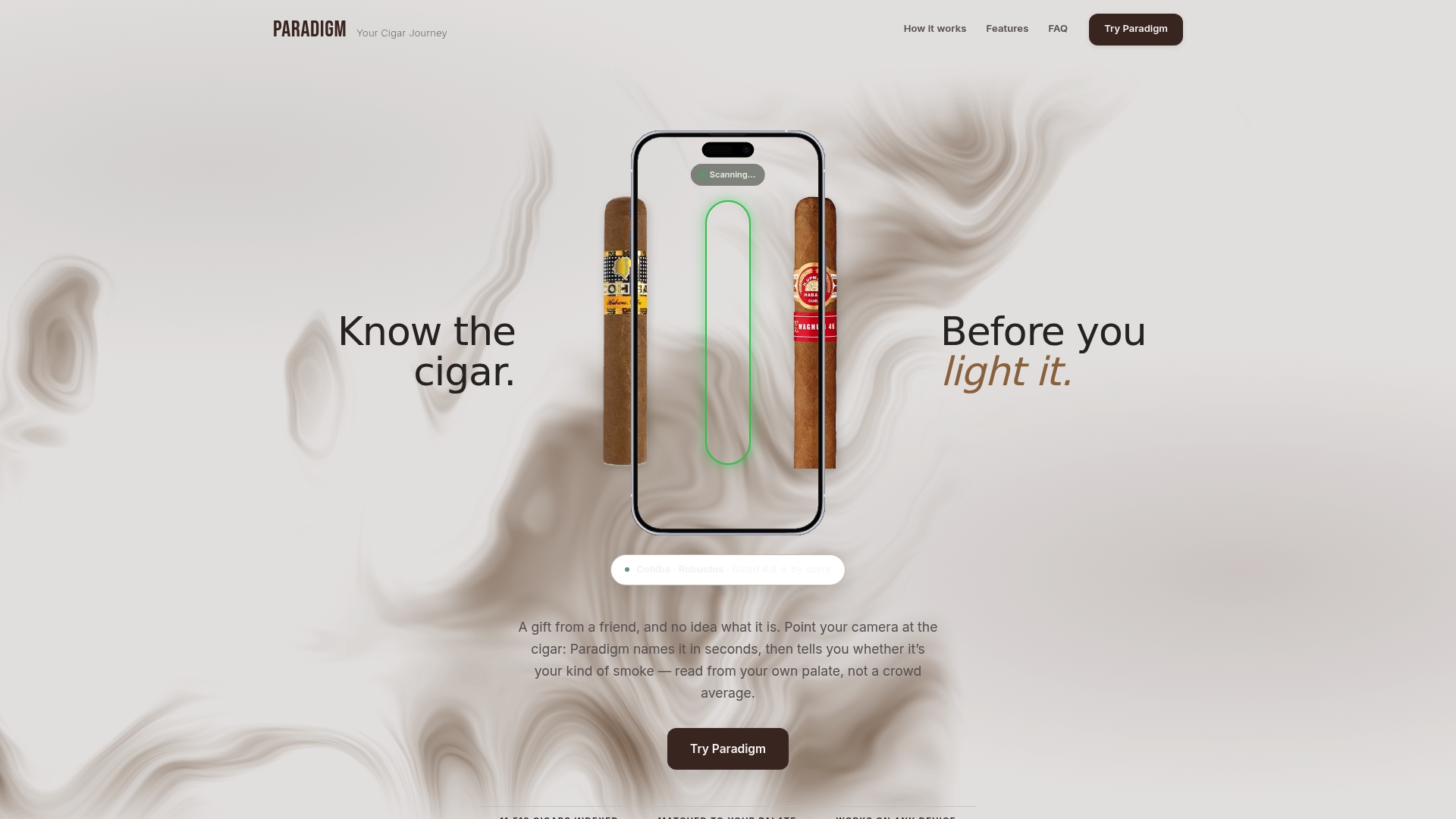
Instead of guessing whether a cigar will lean leather, cocoa, or spice before you buy it, you build a private record that gets sharper every time you log a smoke, note by note, third by third. Visit the Paradigm landing page and add the progressive web app to your phone's home screen, no download required, and start tracking which leathery cigars actually match your palate.
Where These Tasting Notes Come From
The examples and technical claims above draw from published reviews and product pages, each covering a specific cigar's tasting profile in depth.
- An aged-filler Nicaraguan natural-wrapper blend review, covering leather's emergence in the second third.
- A Nicaraguan Maduro blend review, detailing the Maduro wrapper's flavor arc.
- A double-barrel-aged blend review, on creamy leather and cold draw notes.
- A Connecticut Broadleaf-wrapped perfecto product page, on Broadleaf wrapper and late-developing leather.
Sources
- A review of an aged-filler Nicaraguan natural-wrapper blend's tasting notes and score, via Boozemakers.
- A review of a Nicaraguan Maduro blend's flavor profile, via Bathrobe Patriot.
- A review of a double-barrel-aged blend, via halfwheel.
- A product page for a Mexican San Andrés-wrapped torpedo, via Cigar Grail.
FAQ
What Is the Smoothest Tasting Cigar?
Smoothness generally comes from a well-aged filler and a wrapper with lower tannin content, like a Connecticut Shade rather than a Maduro. Among leather-forward options, an aged-filler Nicaraguan natural-wrapper blend reads as notably smooth because its filler is aged at least 2.5 years before rolling, softening what would otherwise be a sharper leather edge.
What Are Some Examples of Cigars With Leather Tasting Notes?
An aged-filler Nicaraguan natural-wrapper blend, a Mexican San Andrés-wrapped torpedo, a Nicaraguan Maduro blend, and a double-barrel-aged blend all show clear leather notes backed by published reviewer tasting profiles. A Connecticut Broadleaf-wrapped perfecto, two boutique blends with a softer leather profile, and a thin-ring lancero round out the list with slightly different wrapper and shape combinations.
What Is the "135 Rule" for Cigars?
There's no single standardized "135 rule" recognized across the cigar industry, and definitions vary depending on the source. Some smokers use loose numeric shorthand for humidity or temperature targets in storage, but for reliable storage guidance, use generally accepted moderate conditions rather than any informal numeric rule.
Which Wrappers Are Most Likely to Produce Leather Notes?
Mexican San Andrés, Connecticut Broadleaf, and dark Nicaraguan Maduro wrappers are the most consistent sources of leathery flavor, thanks to heavier fermentation and higher tannin retention. Origin and curing method matter as much as color, since not every dark wrapper delivers the same intensity of leather.
Can Paradigm Help Me Find Cigars With Leather Notes Specifically?
Yes. A Tasting Match feature uses recorded flavor preferences to flag cigars likely to lean leather-forward before you buy, drawing from a large catalog of Cuban and New World cigars. You can also log tasting notes by third to track how a leather note develops or fades as a specific blend ages in your humidor.
Recommended
- Why does a cigar taste completely different by the last third than it did at the start?
- How do I deliberately get better at telling cigars apart instead of everything tasting the same?
- Why does my cigar keep going out, burn unevenly, or taste bitter — and how do I fix it?
- How are cigar flavours categorized, and what does a term like 'barnyard' actually mean?