Stop Buying Boxes: Use a Palate Journal to Find Cigars by Line

The fastest way to find cigars by line is to scan the cigar — band, wrapper, and shape — with an app or run it through an online catalog search, then cross-check the result against a tobacconist directory if you need to see and smell the stick in person. Once you have a name, buy a single or a small sampler before committing to a box. That single step, sampling before buying, saves more money and disappointment than any amount of research.
TL;DR:
- Scanning the whole cigar — band, wrapper, shape, and cap — is the quickest way to identify a cigar line when those details are intact and legible, but manual lookup is necessary if the band is damaged or missing.
- Wrapper type influences flavor profiles more than country of origin or brand, with Connecticut for milder tastes and Maduro for fuller-bodied profiles.
- Testing multiple cigars across different sessions with notes helps refine preferences and avoid rejecting lines based on single imperfect experiences.
- Buying singles or sampler packs before committing to a box minimizes risk and allows tailored testing without overspending.
- An app like Paradigm helps match cigars to your palate profile and tracks your preferences, improving recommendation accuracy over time.
Practical Methods to Find Cigars by Line
Scanning the cigar is the quickest identification method when the band, wrapper, and shape are intact and legible. Point a phone camera at it, and an app matches the band artwork, wrapper color, cap style, and vitola dimensions against a catalog to return the line name, wrapper, and origin in seconds. When scanning fails, usually because the band is torn, faded, or from a small batch the catalog hasn't indexed, manual lookup is the fallback: type in whatever text survives, along with the shop or region where you got it, into a search engine or catalog site.
Catalog searches work well when you have a fragment of information but no clear band. Retailers such as Cuenca Cigars organize their inventory by blend and line rather than just by brand, which makes it easier to scroll a specific maker's lineup and spot the one you smoked at a friend's house last month. Advanced search tools go a step further. Holt's search filters let you narrow by wrapper, strength, shape, and country of origin simultaneously, which is useful when you remember the cigar was a dark, oily wrapper with a boxy press but nothing else.
Tobacconist directories close the loop when digital tools hit a wall. A tobacconist locator points you to shops where staff can identify a line by sight, smell, and sometimes by feel alone, since many have handled thousands of releases.
Here's how these methods stack up for speed and accuracy:
- Full cigar scan: fastest, works only when the band, wrapper, and shape are legible and cataloged
- Manual catalog search: moderate speed, works with partial information
- Advanced filters: slower but precise when you know wrapper or strength
- Tobacconist visit: slowest, but often the most reliable for obscure or older releases
- Sampler purchase: not identification, but the fastest way to confirm a guess
What a Line's Wrapper, Origin, and Strength Actually Tell You
A cigar's wrapper is the single biggest predictor of what you're about to taste, more than the country of origin or even the brand name. Connecticut shade wrappers tend to produce milder, creamier smokes with notes of hay and light nuts. Habano and maduro wrappers push toward fuller-bodied profiles with pepper, cocoa, and dried fruit, since maduro leaves undergo extra fermentation that darkens the leaf and deepens the sugars. CigarCountry's breakdown of wrapper and strength patterns is a solid starting reference if you're trying to translate a spec sheet into an expectation.
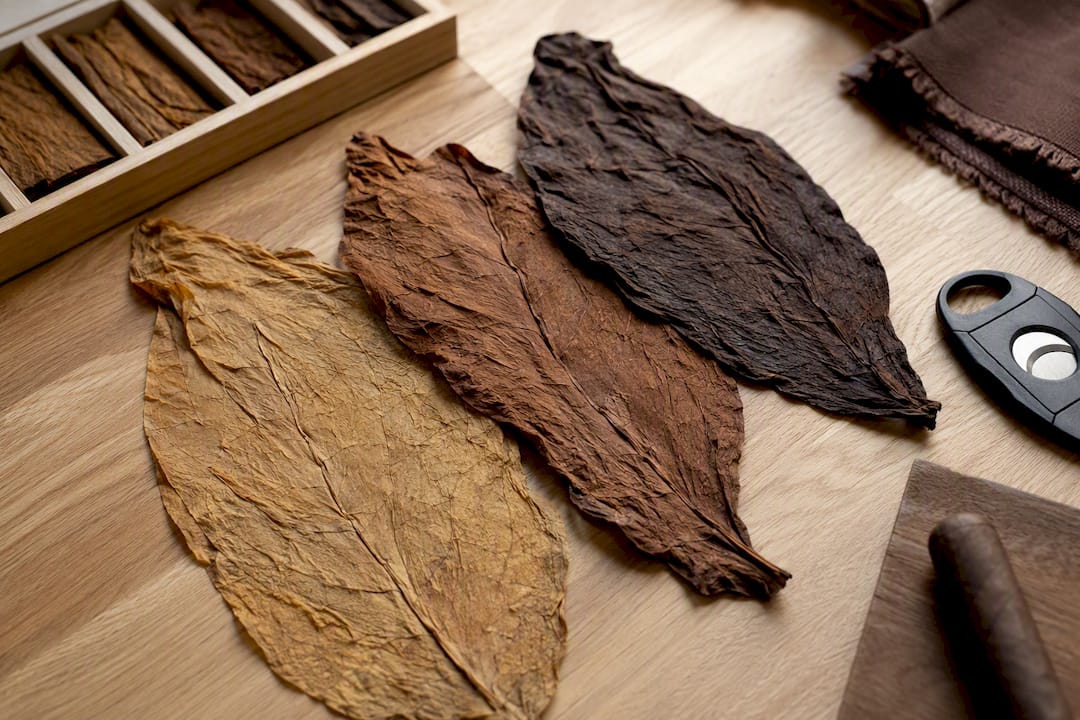
Origin shapes the house style more than most smokers realize. Dominican tobacco tends toward smoothness and balance. Nicaraguan leaf, grown in volcanic soil, often runs spicier and more full bodied. Honduran tobacco frequently lands in between, with an earthier edge. None of this is absolute. It's a tendency, not a rule, because blenders can push any origin's leaf in either direction.
One distinction trips up more people than any other: strength, body, and flavor are three separate variables, not one sliding scale. A cigar can be strong in nicotine but light in flavor, or mild in strength while delivering an intensely flavorful smoke. Confusing the three is the most common reason smokers reject a line that would have actually suited them. A quick primer on strength versus body versus flavor clears up the distinction fast.
Vitola matters too. A longer, thicker ring gauge burns cooler and slower, giving flavors more room to develop. A short, narrow vitola concentrates everything and runs hotter, so the same blend can taste noticeably different depending on the size you pick.
A Step-by-Step Workflow for Finding Lines You'll Actually Like
- Pick your anchors. Choose one strength preference and one or two wrapper or flavor notes you already know you enjoy, like Connecticut and a mild pepper finish.
- Build a shortlist. Scan the whole cigar — band, wrapper, and shape — on anything you already have, or run advanced filters on a retailer site to generate three to five candidate lines matching your anchors.
- Sample across sessions. Smoke each candidate at least twice, in different contexts, paired with different drinks, at a different time of day, before ruling it in or out.
- Record everything. Log the wrapper, strength, flavor notes, and how it paired, then compare notes across candidates to see which patterns actually hold up.
- Refine and repeat. Use what you recorded to adjust your anchors and generate a sharper shortlist next time.
Pro Tip: A cigar that tastes harsh in the first third but mellows out by the midpoint isn't necessarily a bad match. Rest a few unopened boxes for two to three weeks and retest before writing off the line entirely.
The recording step is where most smokers fall short. Memory is unreliable after the tenth cigar of the month, and without notes you'll keep rediscovering the same disappointing lines. A tracking habit built around your palate turns scattered impressions into a pattern you can actually use.
Where to Buy Singles and Samplers Without Overspending
Testing a candidate line doesn't require a box commitment. Most reputable online retailers sell singles and curated samplers specifically for this purpose, and reading the retailer's own tasting notes alongside verified customer ratings gives you a second opinion before you spend anything — for example, check out Unique Lighters' accessory and sampler selection to accompany your cigar trials.
In-store tobacconists add something a website can't: a person who has smoked the release and can tell you how it's evolved since launch. Worth asking:
- How fresh is this box, and when did the shipment arrive?
- Is this a limited or annual release, or a standard production line?
- What would you recommend alongside it, in a similar strength or wrapper?
Budget three to six sampling sessions spread across a few weeks before judging a line fairly. One cigar on one bad night tells you almost nothing. Sampling singles before buying a box is standard advice among tobacconists for exactly this reason, and it applies just as much to seasoned smokers exploring a new house style as it does to beginners.
Troubleshooting a Line Before You Write It Off
An uneven burn or a tight draw is often a storage or construction issue, not proof the blend itself is wrong for you. Touch up an uneven burn with a lighter, let a harsh-tasting cigar rest a few minutes, and re-light rather than force through resin buildup.
Before blaming the line:
- Check humidity. Anything outside 65 to 70 percent relative humidity distorts burn and flavor.
- Check technique. A drawn-out puff versus quick, frequent draws changes how hot the cigar burns.
- Check pairing. A heavy pour of bourbon or strong coffee can mute or exaggerate notes that a glass of water would reveal clearly.
Pro Tip: Retest a questionable stick from the same box on a calm evening with nothing stronger than water. If it still tastes harsh, it's the cigar, not the circumstances.
Why Lines Beat Brands for Serious Discovery
Brand names sell a story. Lines sell a blend, and the blend is what actually hits your palate. Chasing brand reputation instead of line-level detail is why so many smokers cycle through boxes without ever narrowing their preferences.
Patience matters more than most guides admit. One good or bad cigar tells you little. A pattern across five or six sessions tells you everything. That's the entire case for tracking sessions deliberately instead of relying on memory: the discipline, not the tool, is what sharpens a palate over time.
— Yaro
Finish the Search With Paradigm Your Cigar Journey
Paradigm Your Cigar Journey is built for the exact workflow this article just walked through: narrow, verify, record. Scan the whole cigar — band, wrapper, shape, and cap — and match it instantly against a large catalog of cigars, or search manually when the band won't cooperate. Once you've got a candidate, the app's Tasting Match tells you whether it's likely to suit your palate profile and explains why, so you're not burning through singles on guesswork.
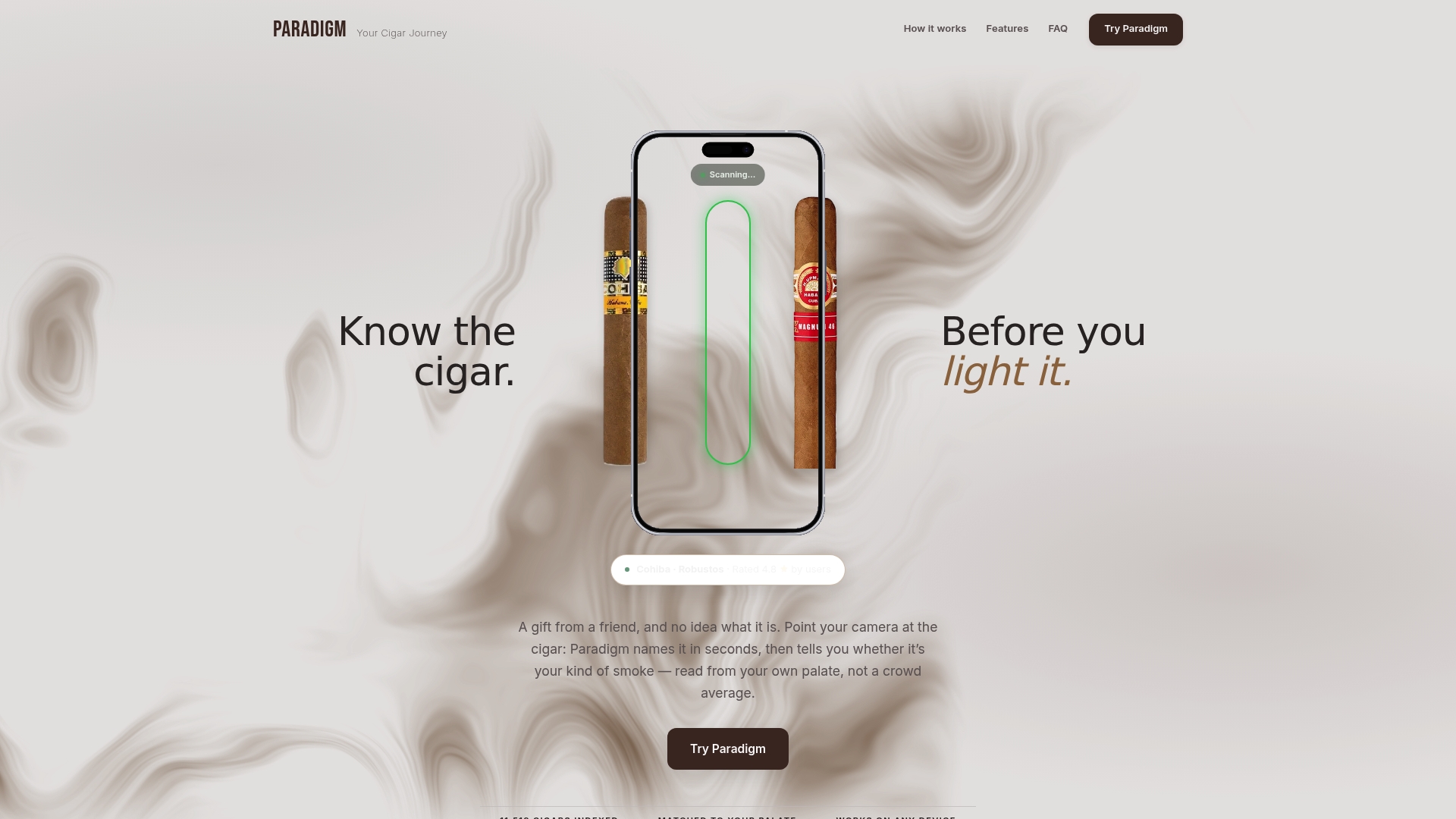
Every session you log sharpens that palate profile further, and your private tasting history means you never rediscover a line you already ruled out three months ago. If you're tired of buying boxes based on a hunch, start building your profile with Paradigm and let the next recommendation come from your own tracked preferences instead of a guess.
Sources
- Find Your Tobacconist
- Top premium cigar Brands: Types, Blends & Origins Explained - Cigar Country
- Shop All Cigars — Cuenca Cigars
- Holt's Online Cigar Recommender: Find Your Perfect Cigar
FAQ
What's the fastest way to identify a cigar from its band?
Scan the cigar — band, wrapper, shape, and cap — with a catalog app or search the visible text manually against an online retailer's line listings; a tobacconist can confirm it in person if digital tools come up empty.
How many cigars should I try before judging a line?
Plan on three to six sessions across a few weeks, since one stick on one night doesn't reveal how a blend actually performs.
Does wrapper color tell me more than the brand name?
Usually, yes. Wrapper type, whether Connecticut, Habano, or maduro, predicts flavor and strength more reliably than the brand it's sold under.
Can an app really predict whether I'll like a cigar?
Paradigm Your Cigar Journey generates a Tasting Match from your five-dimension palate profile, and that match gets more accurate as you log more sessions.
Is it better to buy a box or a single stick first?
Always test with a single or a small sampler first. A full box commits you to many cigars of a blend you haven't confirmed you enjoy.
Recommended
- How do I deliberately get better at telling cigars apart instead of everything tasting the same?
- How do I decide what cigar to smoke next instead of picking randomly?
- What should I actually look for in a cigar journal or humidor tracking app?
- How can I predict whether I'll like a cigar before I actually smoke it?