50/30/20 Cigar Budget: 5 Step Wishlist Strategy for Enthusiasts
Treat your wishlist as an active buy list, not a bucket of "someday" cigars. Sort every candidate into foundation, exploration, or ageing, test anything new with singles before committing to a box, and set a simple budget split across the three categories. Audit the list regularly so it reflects your current palate and stock, not last year's cravings.
TL;DR:
- Prioritize buying foundation cigars only after confirming consistent performance through multiple smoke sessions, not based on hype or impulse.
- Use single cigars or small samplers to test exploration options, and only purchase boxes for proven favorites after thorough evaluation.
- Track key details such as purchase date, storage, and tasting notes to prevent duplicate buys and ensure reliable future decisions.
- Regularly review your wishlist weekly, monthly, and annually to remove items that no longer suit your preferences and rebalance your budget.
- Confirm authenticity, storage conditions, and reasonable market pricing before making any purchase to avoid scams and poor-quality cigars.
Foundation, Exploration, Ageing: The Categories That Run Your Cigar Wishlist Strategy
Most wishlists fail because every cigar gets treated the same way, whether it is a proven daily smoke or a limited-run release you saw hyped on a forum last week. A working cigar wishlist strategy starts by splitting candidates into distinct buckets, each with its own buying rule.
Foundation cigars are the ones you already know suit your palate. These are candidates for box purchases, since you have consistent evidence they perform session after session and buying in bulk actually saves money over time.
Exploration purchases are anything new, hyped, or unproven for your palate. Buy these as singles, or in small samplers of three to five sticks, so you can test the profile without overcommitting. The Manual's guide to starting a collection makes the same point: samplers let you discover what you actually like before spending on a full box.
Ageing candidates need structural traits that justify the wait, usually a heavier ligero content, a maduro or oscuro wrapper, or a reputation for improving past the two-year mark. These belong on the wishlist with a note about why they are worth cellaring, not just that they sound interesting.
- Foundation: proven flavor fit, buy boxes once repeat sessions confirm quality
- Exploration: unproven or hyped, buy singles or small packs only
- Ageing: strong structural cigars, buy with a multi-year holding plan
- Occasion or wildcard items: budget a small, fixed amount separately so a gift purchase or a rare find does not eat into your staple fund
How Do You Build a Wishlist That Matches Your Actual Smoking Habits?
A wishlist that ignores how often you actually smoke is just a fantasy list. Building one that matches your real pace takes five repeatable steps.
- Check your inventory first. Before adding anything new, look at what you already own. This single step, backed by inventory-focused cigar tracking guidance, prevents the most common wishlist mistake: buying a cigar you already have three of because you forgot.
- Score each candidate. Rate it on palate fit, price relative to your budget, how soon you will realistically smoke it, actual rarity versus manufactured hype, and whether reviews reflect real evidence or just launch-week noise.
- Sample before you commit. Buy one or two singles, smoke them across separate sessions (mood and food pairing skew a single data point), then escalate to a small pack. Only move to a box once the cigar has proven itself across repeat sessions rather than a single lucky smoke.
- Split your budget by category. A reasonable starting split runs roughly 50% to foundation staples, 30% to exploration, and 20% to ageing stock. Adjust the ratio as your palate and cellar mature.
- Watch for genuine buy-now triggers. True scarcity (a factory closing a line), a verified aged box at a fair price, or a limited release you have already sampled and loved are the only situations that justify skipping the sampling step.
Pro Tip: Keep a running note of which exploration singles you have already tried and liked. When a sampler or small pack shows up on sale, you will know instantly whether it is worth restocking or a pass.
Insiders rarely panic-buy boxes the week a limited release drops. They buy singles, evaluate across sessions, and only scale up once the cigar proves reliable, and they will often choose an aged box of a known quantity over chasing a fresh hype release.
What Should You Actually Track to Avoid Buying Duplicates?
You do not need an elaborate spreadsheet to stop overbuying. You need eight fields, tracked consistently: name, vitola, purchase date, box code, quantity, storage location, personal rating, and a short tasting note.
That short list does most of the work. Tracking purchase dates, quantities, and tasting notes is the difference between a wishlist that reflects reality and one that just accumulates names you half remember liking.
- Compare every wishlist candidate against current inventory before adding it, not after you have already ordered it
- Note the box code separately from the cigar name. It matters more for tracking ageing progress and spotting factory inconsistencies than most people realize
- A spreadsheet works fine for a small collection, a notebook works if you genuinely prefer pen and paper, and a progressive web app built for cigar tracking works best once your list grows past a couple dozen active candidates
- Tasting history is what actually converts a single into a box decision. If your notes show three consecutive sessions rated well above your average, that is your signal to buy more, not the marketing copy on the band
Your tasting record should function as the real decision engine here, more than any hype cycle or forum thread ever will.
How Often Should You Review Your Cigar Wishlist?
A wishlist you never revisit is functionally the same as no wishlist at all. Run a quick weekly scan, a monthly prune, and a full annual rebalance.
The weekly scan takes two minutes: skim new additions, remove anything you added on impulse and no longer want. The monthly prune goes deeper, checking each item against your inventory and recent tasting notes. The annual rebalance is where you adjust your budget split and reconsider whether last year's foundation staples still deserve the slot.
- Remove duplicates and anything already covered by current stock
- Demote items that no longer fit your palate based on recent sessions
- Promote singles that tested well into "buy box" status
- Reallocate a portion of your budget toward whichever category is underperforming its allotment
Seasonal timing matters too. Cooler months often shift smokers toward fuller-bodied, spicier profiles, while summer sessions lean lighter, so your exploration slots should rotate with that. A dynamic wishlist review routine beats an elaborate tracking system precisely because it forces regular contact with your actual preferences instead of a list that just grows.
Pro Tip: Set your annual rebalance for the same week every year, ideally right before a major cigar event or holiday buying season, so your budget split is fresh when the good releases show up.
What to Check Before You Buy: A Quick Purchase Checklist
Buyer's regret usually traces back to skipping one of five checks at the point of sale.
- Confirm authenticity through the seller's reputation and, for Cuban cigars, the factory code and box markings
- Ask about storage history. A cigar sitting in a dry, unregulated stockroom is a different product than one held at 65 to 72% relative humidity
- Compare the price to typical market rates for that cigar and vitola. A steep discount on a hyped release is a red flag more often than a lucky find
- Check construction by hand. Uneven caps, soft spots, or a wrapper that looks dry all suggest poor storage regardless of what the price tag says
- Confirm you actually have time to smoke it soon, or a proper aging plan if you do not
Red flags worth walking away from include suspiciously low pricing with no explanation, missing provenance on aged stock, an inconsistent factory code on what is sold as a single batch, and hype built entirely on one enthusiastic review with no supporting consensus. A box is justified when you have already tested singles and confirmed the fit; singles are enough for anything still unproven, including most limited runs. For genuinely scarce Cuban releases, buying now makes sense only when the price is fair and provenance is solid. Otherwise, waiting for a second production run or a calmer market rarely costs you much.
Running the Strategy With a Cigar Journal App
A written wishlist strategy only works if you actually follow through on the sampling and tracking steps, and that is where most enthusiasts quietly fall off. Recording every purchase and tasting note gives you the evidence to test singles honestly before deciding whether a box is warranted, rather than relying on memory or gut feeling three weeks later.
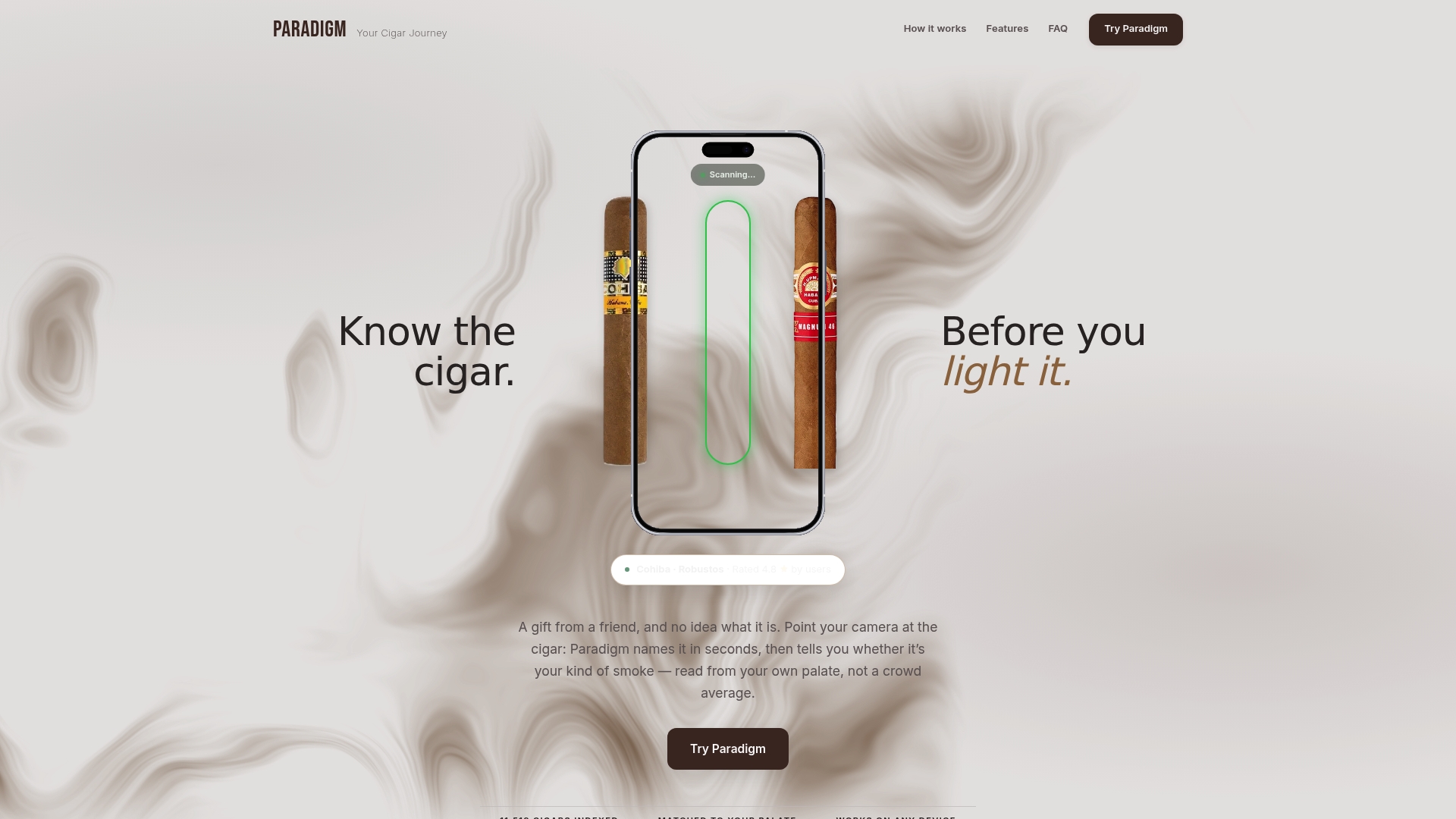
Paradigm Your Cigar Journey is a browser-based progressive web app that lets you log a session without needing a native download. Its catalog includes a large range of Cuban and New World cigars, and scanning the cigar's band, wrapper, shape, and cap brings up the specific vitola to simplify identification.
- Palate-based Tasting Match scores help you judge whether a wishlist candidate is likely to fit before you spend money finding out
- Community and critics' ratings give you a second opinion beyond a single hyped review
- A searchable smoking history prevents the duplicate purchases that a passive wishlist tends to create
- A five-dimension palate profile sharpens over time as you log more sessions, making each new Tasting Match slightly more accurate than the last
Why Most Wishlists Fail Before the First Purchase
The biggest mistake enthusiasts make is not poor cigar selection. It is treating the wishlist as a wish rather than a plan, which turns every purchase into an emotional decision instead of a tested one.
Take a hyped limited release: the temptation is to grab a box the day it lands. A tighter approach is buying two singles, smoking them a week apart under different conditions, and only ordering a box after both sessions land above your personal average. That gap between impulse and evidence is where regret gets prevented, not eliminated by willpower.
This kind of tactical thinking is exactly what shaped how Paradigm Your Cigar Journey's tasting and recommendation tools got built: cigar decisions improve fastest when they are logged, compared, and revisited, not guessed at in the moment.
— Yaro
Put the Wishlist Strategy Into Practice With Paradigm
Paradigm Your Cigar Journey gives you the tracking layer this entire strategy depends on, without asking you to build a spreadsheet from scratch or download another app. Scan the cigar's band, wrapper, shape, and cap to identify it from the catalog, log your tasting notes right after the session, and let the Tasting Match feature tell you whether an exploration candidate is likely to fit your palate before you buy a second one.
Your smoking history stays private, searchable, and synced across devices, so checking inventory before adding something to your wishlist takes seconds instead of a memory test. If you want to see how this fits your current cigar tracking app setup, or whether an app genuinely beats a spreadsheet for your collection size, start by visiting Paradigm Your Cigar Journey and adding your first few cigars to build a real record instead of a guess.
Sources
- How to Build a 2026 Cigar Buy List Like an Insider
- How to Start a Cigar Collection (The Manual)
- How to Use Wishlist and Top Products to Decide Faster.
- Beyond the Humidor: Why You Need to Inventory Your Cigar Collection - The Daily Blaze
FAQ
What Is the Holy Grail of Cigars?
There is no single cigar universally agreed to be the "holy grail," since the term usually refers to whichever rare or discontinued release a given smoker has chased for years. For most collectors it means a specific aged box or a discontinued line rather than one fixed cigar, which is why treating exploration and ageing as separate wishlist categories matters more than chasing one mythical stick.
Is Smoking Two Cigars a Day Okay?
Cigar smoking carries known health risks regardless of frequency, and two a day is a meaningfully heavier habit than occasional smoking. Anyone concerned about frequency or health impact should talk to a doctor rather than rely on general guidance, since individual risk factors vary widely.
Why Do People Put a Toothpick in a Cigar?
A toothpick pushed through the foot of a cigar is typically used to improve airflow when a cigar is drawing too tight, or occasionally to help relight a cigar evenly. It is a quick fix rather than a substitute for buying well-constructed cigars in the first place, which is why checking construction at purchase time matters.
Are Cigar Sales Declining?
Cigar sales trends vary by category and market, with premium and boutique segments often performing differently than mass-market lines. Rather than tracking industry-wide sales figures, a tighter wishlist strategy focused on proven staples and tested exploration purchases protects your own buying decisions regardless of broader market swings.
How Do I Stop Buying Cigars I Already Own?
Check your existing inventory against your wishlist before every purchase, using at minimum the cigar name, vitola, and purchase date as reference points. Tools like Paradigm Your Cigar Journey keep that inventory searchable, so a duplicate purchase becomes obvious before you check out rather than after the box arrives.
Recommended
- How do I decide what cigar to smoke next instead of picking randomly?
- Why does my cigar keep going out, burn unevenly, or taste bitter — and how do I fix it?
- Cigar 101: what a beginner actually needs to know
- How do I deliberately get better at telling cigars apart instead of everything tasting the same?