1–10 Scoring and Thirds: A Cigar Tasting Workflow for Cigar Smokers

A reliable cigar tasting workflow is: observe the cigar, taste and document it in thirds using cold draws and retrohales, then evaluate and record construction plus flavor evolution. This three-stage sequence, drawn from established tasting methodology, turns a pleasant smoke into a repeatable record you can act on later.
TL;DR:
- Consistent cigar tasting involves observing the cigar before lighting, dividing into thirds during smoking, and evaluating the overall experience afterward.
- Proper preparation of the palate and environment, along with controlled pacing and retrohaling, significantly enhances flavor detection and note accuracy.
- Recording detailed, third-by-third notes on flavor, construction, and mechanics supports better future comparisons and purchase decisions.
- Common pitfalls include rushing, overheating, and using overly specific descriptors early on, which can distort flavor perception.
- Using a structured journaling app streamlines note-taking, pattern recognition, and repeat ordering, reinforcing skill through repeated practice.
What observation, description, and evaluation actually mean
A structured tasting session moves through three distinct stages, and knowing what belongs in each one keeps your notes consistent from cigar to cigar. According to tasting methodology research, these stages are observation, description and comparison, and evaluation, with sensory techniques like retrohaling used throughout to sharpen flavor identification.
Here is how the stages map to concrete actions during a session:
- Observation: Check the wrapper, feel the cigar, and take a cold draw before lighting.
- Description and comparison: Light up, divide the smoke into thirds, and note flavors as they shift, using retrohales and paced puffing to catch details.
- Evaluation: After the cigar is out, judge the overall experience and decide whether you would repeat it, age it, or trade it away.
Each stage builds on the last. Skipping observation means you lose the baseline that makes the in-smoke notes meaningful, and skipping evaluation means the whole session produces impressions instead of usable knowledge.
Preparing your palate and environment before you light up
Your palate carries the residue of whatever you ate or drank last, so give it time to reset. Waiting after coffee, spicy food, or anything heavily flavored helps you taste the cigar rather than your lunch.
The room matters just as much. Tasting methodology guidance recommends a neutral, distraction-free space, since competing aromas and inconsistent lighting can skew what you perceive as cigar flavor rather than room noise.
Before lighting, work through a short inspection routine:
- Look at the wrapper for color, oil, and any visible damage.
- Feel along the length for soft spots or hard veins that suggest uneven filler.
- Take a cold draw and note resistance and any pre-light aroma.
- Cut cleanly, then toast the foot slowly while rotating the cigar to avoid scorching one side.
Pro Tip: Light in short bursts and rotate constantly. A scorched foot produces a bitter first third no blend can fully recover from.
Sensory techniques that reveal a cigar's full flavor
The cold draw before lighting sets your baseline. You are not tasting smoke yet, just picking up faint sweetness, spice, or earthiness carried on the unlit tobacco, and that first impression often previews what shows up once you light the foot.

Pacing controls almost everything that follows. Puffing too fast overheats the tobacco and produces flat, acrid notes no matter how good the blend is. A workable rhythm, drawn from practical tasting guidance, is to pace your draws with a three count in, a brief three count hold, and a three count exhale, which keeps the smoke cool and preserves the oils that carry flavor.
Retrohaling adds a dimension cold draws and straight puffs cannot. You exhale a small amount of smoke through your nose instead of your mouth, and this route across your olfactory receptors reveals flavors your tongue alone misses. It takes practice and a light touch, since forcing too much smoke through too fast just causes discomfort rather than insight.
Dividing the cigar into thirds gives you a framework for tracking how all of this changes over the course of a smoke:
- First third: Note the dominant flavor on light, draw resistance, and how the retrohale compares to the pre-light aroma.
- Second third: Watch for new flavors entering, any shift in strength, and whether the burn stays even.
- Final third: Expect more concentration and heat, and note whether flavors intensify cleanly or turn harsh.
Pro Tip: If a flavor seems to vanish and reappear, retrohale again before assuming it is gone. Nasal detection often catches what a straight puff misses.
Building a tasting sheet that actually captures useful data
A tasting sheet only earns its place in your routine if the fields on it are ones you will actually fill in every time. According to editorial review routines built around this kind of documentation, tracking flavors by third alongside mechanical performance produces the kind of record that actually informs future buying decisions.
At minimum, your template should include:
- Identifying details: brand, size or vitola, and date smoked.
- Conditions: humidity and any notes on environment.
- Pre-light notes: wrapper appearance, feel, and cold draw impression.
- In-smoke notes: separate entries for first, second, and final thirds.
- Mechanics: draw, burn, and ash quality, logged plainly as tight, normal, or loose for draw and even, wavy, or needing a touch-up for burn.
- Finish and overall score: a simple 1 to 10 rating for strength, body, balance, and overall enjoyment.
For flavor vocabulary, start broad. Cigar 101 guidance suggests using categories like earthy, woody, spicy, sweet, nutty, coffee, and floral rather than forcing precise food comparisons before your palate is ready for them. Consistent categories, applied session after session, are what let you spot patterns across strength, body, and flavor that a single night's impressions never reveal.
Turning your notes into real decisions
Once the notes exist, the point is to use them. A cigar that scores well on flavor but shows a tight draw or tunneling burn is telling you something different than one that scores poorly across the board.
Reading your own record correctly means separating the blend from the construction:
- Great blend, flawed construction: A tight draw or wavy burn masked flavor that likely would have scored higher with a better sample.
- Genuinely underwhelming blend: Even, clean construction with flat or one-note flavor across all thirds.
- Worth aging: A young cigar with harsh transitions but promising underlying flavor, especially early in how it changes across the thirds.
- Worth trading or skipping: Consistent bad results across multiple samples of the same cigar, ruling out a one-off bad specimen.
Strength and body patterns in your notes also guide pairing and future purchases, since a cigar that reads full-bodied and spicy calls for a different drink and a different mood than one that reads mild and sweet.
Mistakes that quietly ruin a tasting session
The most common mistake beginners make is reaching for exotic, hyper-specific descriptors before their palate can support them. Cigar 101 guidance recommends broad categories at first, since forcing precision produces notes that sound impressive but are not actually reliable or repeatable.
Overheating is the second major trap. If a cigar suddenly tastes bitter and harsh partway through, check your pace before you blame the blend:
- Puffing too fast: Slow down and let more time pass between draws.
- Smoke feels hot in your mouth: Let the cigar rest for a minute before continuing.
- Burn looks uneven or is running hot on one side: Rotate more deliberately next time you light.
A single bad session is not always the cigar's fault. Before writing off a blend, ask whether the room was smoky or distracting, whether you smoked too fast, or whether the draw or burn pointed to a construction issue rather than the tobacco itself.
How a journaling app fits into this workflow
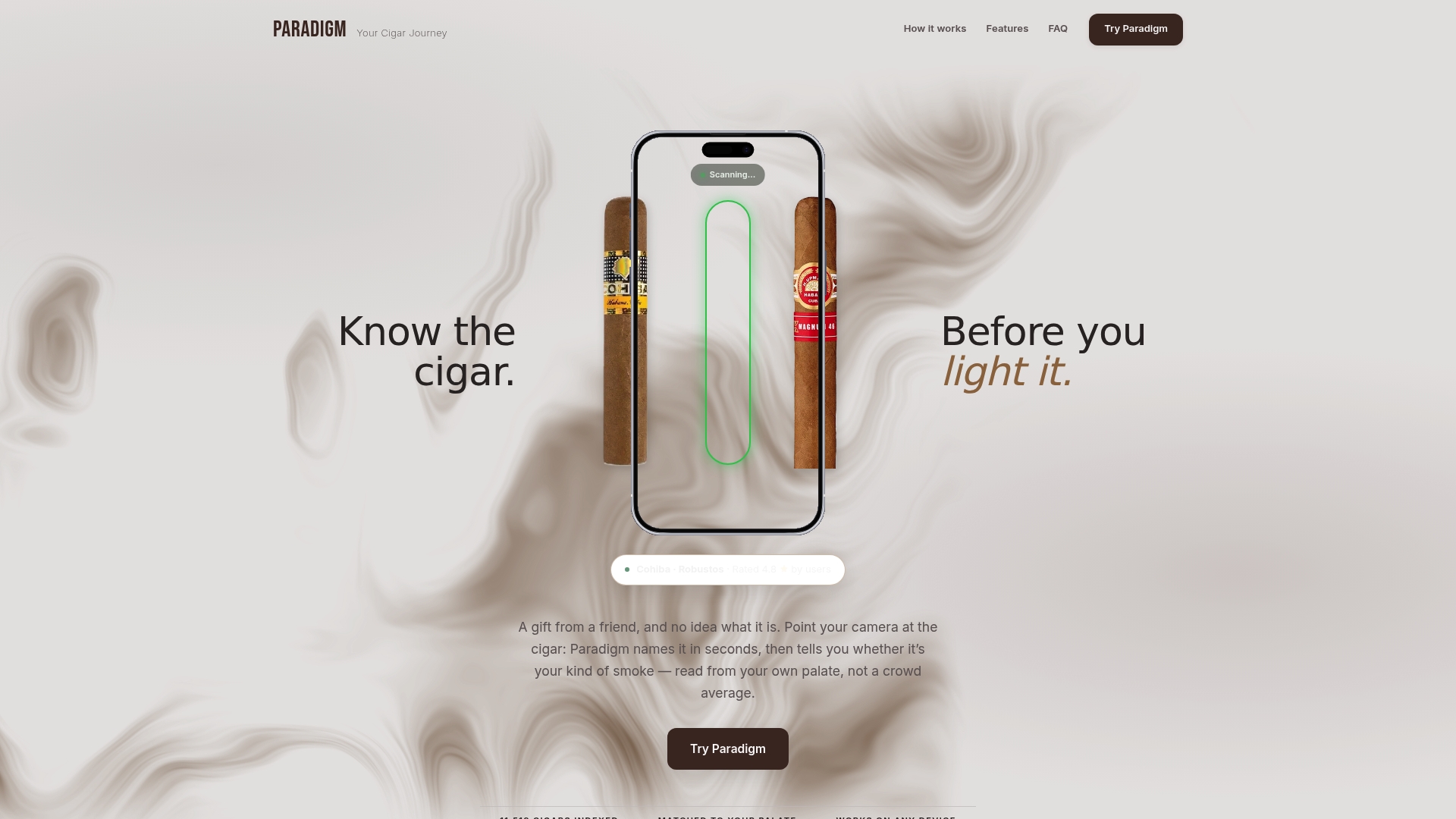
Every field recommended above, from pre-light notes to third-by-third flavor tracking to draw and burn quality, maps directly onto what a structured cigar journal is built to capture. A cigar journaling app can let you scan a cigar to pull up its catalog entry by recognizing its band, wrapper, shape, and size instead of typing details by hand, then log notes by third and store them in a searchable smoking history.
That searchable history is where the real payoff shows up over time:
- Faster repeat decisions: Pull up a past entry instead of relying on memory.
- Pattern recognition: A palate profile that improves as you log more sessions.
- No native download required: Some apps run as browser-based progressive web apps you can add to your home screen.
Why structured repetition beats trying to remember everything
Tasting notes only become useful once you have enough of them to compare. The first dozen entries mostly teach you your own vocabulary, and the payoff arrives later, when a new cigar reminds you of one from months ago and you can check whether that memory holds up.
Thirds and journaling work because they force you to slow down and notice change instead of averaging an entire cigar into one vague impression. Like any skill, it sharpens with consistent practice rather than intensity in a single session.
— Yaro
A practical way to log this workflow without extra effort
Some cigar journaling apps are built around a structure like this guide walks through: scan the whole cigar, recognized by its band, wrapper, shape, and size, to identify it, record notes by third as you smoke, and let a searchable history replace guesswork the next time you consider buying it again.
Beyond the journal itself, some apps offer extras like:
- Personalized Tasting Match: A prediction of fit based on your preferred strength and flavor profile, explained before you light up.
- Broader catalog access: Access to extensive cigar catalogs.
- Cross-device sync: Notes backed up to the cloud so a new phone never means losing your history.
If you want to put the workflow above into practice without building your own tasting sheet from scratch, start with Paradigm.
Where this workflow comes from
This guide draws on established tasting methodology and cigar editorial practice rather than any single opinion. For deeper reading:
- Tobacconist University's tasting methodology outlines the observation, description, and evaluation framework.
- Developing Palates' review routine details thirds-based journaling and mechanical tracking.
- Sig Culture's Cigar 101 guide covers beginner flavor vocabulary.
- Toro Puro's tasting guide explains cold draw, pacing, and retrohale technique.
Sources
- Tobacconist University — Tasting methodology
- Developing Palates — Cigar editorial review routine
- Sig Culture — Cigar 101: How to taste a cigar
- Toro Puro — Taste like a pro: A guide to cigar tasting
FAQ
Is smoking one or two cigars a week considered reasonable?
There is no universal medical guideline defining a "safe" number of cigars per week, so this depends on personal health circumstances and risk tolerance. Many casual smokers keep to a similar occasional pace, but anyone with cardiovascular or respiratory concerns should talk to a doctor rather than rely on a general rule.
What is cigar sickness and what causes it?
Cigar sickness refers to nausea, dizziness, or lightheadedness that can follow smoking too fast, smoking on an empty stomach, or taking in more nicotine than your body is used to. Slowing your pace, as recommended in pacing technique, and easing into stronger cigars gradually both help prevent it.
How do I know if a bad cigar experience was the cigar or the setting?
Check your notes on draw, burn, and ash first, since construction problems like a tight draw or wavy burn can distort flavor regardless of blend quality. If construction looked fine, consider whether pacing, room distractions, or your palate state going in affected the session, and re-test the same cigar under better conditions before judging the blend.
What flavor categories should beginners use when starting a tasting journal?
Beginners should start with broad categories like earthy, woody, spicy, sweet, nutty, coffee, and floral rather than precise food comparisons. Cigar 101 guidance notes that forcing exact descriptors before your palate is trained tends to produce notes that are not actually reliable.
Recommended
- How do I deliberately get better at telling cigars apart instead of everything tasting the same?
- Why does a cigar taste completely different by the last third than it did at the start?
- How do I decide what cigar to smoke next instead of picking randomly?
- How are cigar flavours categorized, and what does a term like 'barnyard' actually mean?