Cigar Smokers: Choose Cigars by Taste Faster with a Three Part Tasting

To choose cigars by taste, start by matching strength to your comfort level, then use wrapper color and origin as directional flavor cues, and confirm your pick with a short three-part tasting while you take notes. Wrapper, terroir, and fermentation drive most of what you taste. Start mild, track what you smoke, and let your notes refine every purchase after that.
TL;DR:
- Wrapper color and origin provide useful directional cues but do not determine cigar strength, which depends primarily on filler tobacco.
- Thinner ring gauges concentrate wrapper flavor, while wider gauges produce a cooler, filler-driven smoke, affecting overall taste.
- Tasting cigars in three stages and keeping notes helps refine preferences and identify flavor shifts during smoking.
- Pairing cigars with drinks matching their strength enhances the experience, and pacing puffs every 45 to 60 seconds prevents overheating and bitterness.
- Systematic journaling and using tools like Paradigm improve your ability to predict cigar preferences and accelerate palate development.
What Actually Drives Cigar Flavor: Wrapper, Origin, and Fermentation
The wrapper leaf is your first impression, and it earns that role honestly. As the most exposed leaf on the cigar, it contributes roughly 30% of the initial taste you notice when you light up. But wrapper is a preview, not the whole story. Filler and binder tobaccos, often from different regions entirely, take over as the smoke progresses.
Origin, or terroir, shapes flavor at a chemical level. Soil composition, climate, and altitude change which volatile flavor compounds a tobacco plant produces, and that is why a Nicaraguan puro tends to run peppery and earthy while a Dominican-heavy blend leans toward cream and quiet sweetness. Applied Microbiology and Biotechnology research found that geographic environment and microbial-driven fermentation both leave measurable fingerprints on tobacco's flavor chemistry, and that fermentation method (stack versus barrel) can make the same seed variety taste noticeably different depending on how it was processed. You can read more about how Cuban and New World tobaccos diverge in terroir if you want the fuller picture.
Construction matters just as much as leaf selection. A few things worth remembering when you're reading a band or eyeing a humidor shelf:
- Ring gauge changes the wrapper-to-filler ratio: thinner cigars taste more like their wrapper, thicker ones taste more like their filler blend.
- Binder tobacco holds the filler together and often adds a structural, less showy flavor note underneath the wrapper.
- Fermentation length softens harsh compounds and develops sweetness, which is part of why well-aged cigars taste rounder than fresh ones.
- Box pressing and shape affect burn temperature, and temperature affects how intensely you taste everything.
None of these factors work in isolation. A Connecticut wrapper on a thin corona will taste different than that same wrapper on a 60-ring gauge cigar, because the filler ratio shifted the balance.
How Do You Taste a Cigar Step by Step?
A structured routine turns guesswork into pattern recognition. Sensory-evaluation practice built around staged notes (cold draw, thirds, finish, mouthfeel) exists precisely because combustion temperature and leaf exposure change as you smoke, so your palate needs checkpoints, not just a final impression.
Here's a workflow you can run on any cigar, from a $6 stick to a special-occasion splurge:
- Pick your starting strength. If you're newer to cigars or unsure of your tolerance, choose mild to mild-to-medium. Strength refers to nicotine impact, not flavor intensity. A full-bodied cigar can still be mild in strength, and confusing the two is one of the most common mistakes beginners make. Our breakdown of strength versus body versus flavor untangles this further.
- Inspect before you light. Check the wrapper for oil and uniform color, then do a cold draw. A clean, moderate draw with a faint sweetness or wood note tells you a lot before you strike a match.
- Track the three thirds. Note flavor at the first third (usually mildest), the middle third (where the blend often peaks), and the final third (hotter, more concentrated, sometimes bitter if you're rushing).
- Retrohale periodically. Exhaling a small amount of smoke through your nose reveals pepper, floral, or baking-spice notes your mouth alone won't catch. Here's how retrohaling works if you've never tried it.
- Write 3 to 5 lines afterward. Rate it, note what worked and what didn't, and file it away.
Pro Tip: Smoke the same blend twice within a few weeks before writing it off. Humidity, your mood, and even what you ate can shift how a cigar tastes on a given day.
How Can You Predict Whether You'll Like a Cigar Before Smoking It?
You can't guarantee a match, but you can shorten the odds considerably by reading a few signals correctly before you buy.
Wrapper color is a reasonable starting filter, not a guarantee. Darker wrappers like maduro or oscuro generally trend sweeter and richer because they've spent more time fermenting, while lighter Connecticut shade wrappers tend toward mild, creamy, and grassy notes. Seed variety phrases on a label (Habano, Corojo, Criollo) hint at pepper and spice levels, and origin labels tell you which terroir profile you're likely getting. None of this is absolute. It's directional.

Vitola matters more than most beginners realize. Thinner ring gauges concentrate wrapper flavor, while wider ring gauges dilute it with more filler, which usually means a cooler, more filler-driven smoke. If you loved a wrapper on a thin lancero, don't assume that same wrapper on a 60-ring gordo will taste the same.
Practical shortcuts that actually save money:
- Buy singles or samplers instead of full boxes when trying a new blend.
- Ask your shop for a half-smoke or split a cigar with a friend to sample without full commitment.
- Read tasting notes from consistent, credible reviewers rather than chasing hype or limited-release marketing.
- Check what a wrapper and shape suggest before you commit to a full box.
How Do Pairings and Pacing Change What You Taste?
What's in your glass and how fast you puff both change what lands on your palate, sometimes more than the cigar itself.
Match your drink to strength rather than to occasion. Mild cigars pair well with light drinks like tea or a crisp white wine, medium cigars hold up to balanced reds or bourbon, and full-bodied cigars can stand next to espresso or higher-proof spirits without getting lost.
Pacing controls temperature, and temperature controls bitterness. Puffing every 45 to 60 seconds keeps combustion cool and prevents the harsh, tarry notes that show up when a cigar overheats.
- Mild strength: pair with tea, light lager, or a crisp white wine.
- Medium strength: pair with balanced red wine or bourbon.
- Full strength: pair with espresso, dark roast coffee, or higher-proof spirits.
- Humidity around 65-70% keeps flavors balanced; drier storage can sharpen bitterness, while extra aging time often softens harsh notes into sweetness.
Recognizing Off-Flavors and Defects
Not every unpleasant note is a flavor profile you simply dislike. Some are defects, and learning the difference saves you from blaming a blend for a problem that was actually a storage or construction issue.
An ammonia-like sharpness usually signals under-fermented tobacco, common in cigars that were rushed to market too young. A harsh, tarry bitterness that shows up early rather than in the final third often points to overly fast puffing or a plugged draw forcing you to pull harder than normal. A musty, moldy smell (distinct from the earthy notes you'd expect from certain wrappers) means the cigar was stored too wet, and you should not smoke it.

Chalky or dry construction, where the cigar burns unevenly or tunnels down one side, tends to produce flat, one-dimensional flavor regardless of what the blend is supposed to taste like. That's a manufacturing or storage issue, not a terroir characteristic.
The real skill is separating "I don't like this flavor" from "something is wrong with this cigar." A genuinely earthy, barnyard-style note from certain Cuban-seed tobaccos is intentional and, for many smokers, desirable. A moldy, ammonia-heavy, or sour note is not. If you're unsure which category something falls into, our guide to cigar flavor categories walks through what's typical versus what's a warning sign.
Why Journaling Your Cigars Speeds Up Your Palate
Most smokers build their preferences by accident, buying whatever's recommended and hoping something sticks. Systematic tasting beats that approach every time. A short note and a repeat sample, smoked a second time within a few weeks, does more for your palate memory than a dozen random cigars smoked once and forgotten.
A profile that updates as you log more sessions, built across flavor, strength, and body dimensions, removes a lot of the guessing. Community ratings help too, but they're a starting signal, not a verdict. Progress slowly. Jumping straight to full-bodied cigars because a friend recommended them skips the calibration work your palate actually needs.
— Yaro
Try Paradigm to Predict and Record Cigar Matches
Paradigm Your Cigar Journey turns the workflow above into something you don't have to reconstruct from memory every time you're standing in a humidor. Scan a cigar — its band, wrapper, shape, and cap — and the app checks it against its catalog, then compares it to your saved strength and flavor preferences to generate a personalized Tasting Match, telling you whether a specific cigar is likely to suit you before you spend money on it.
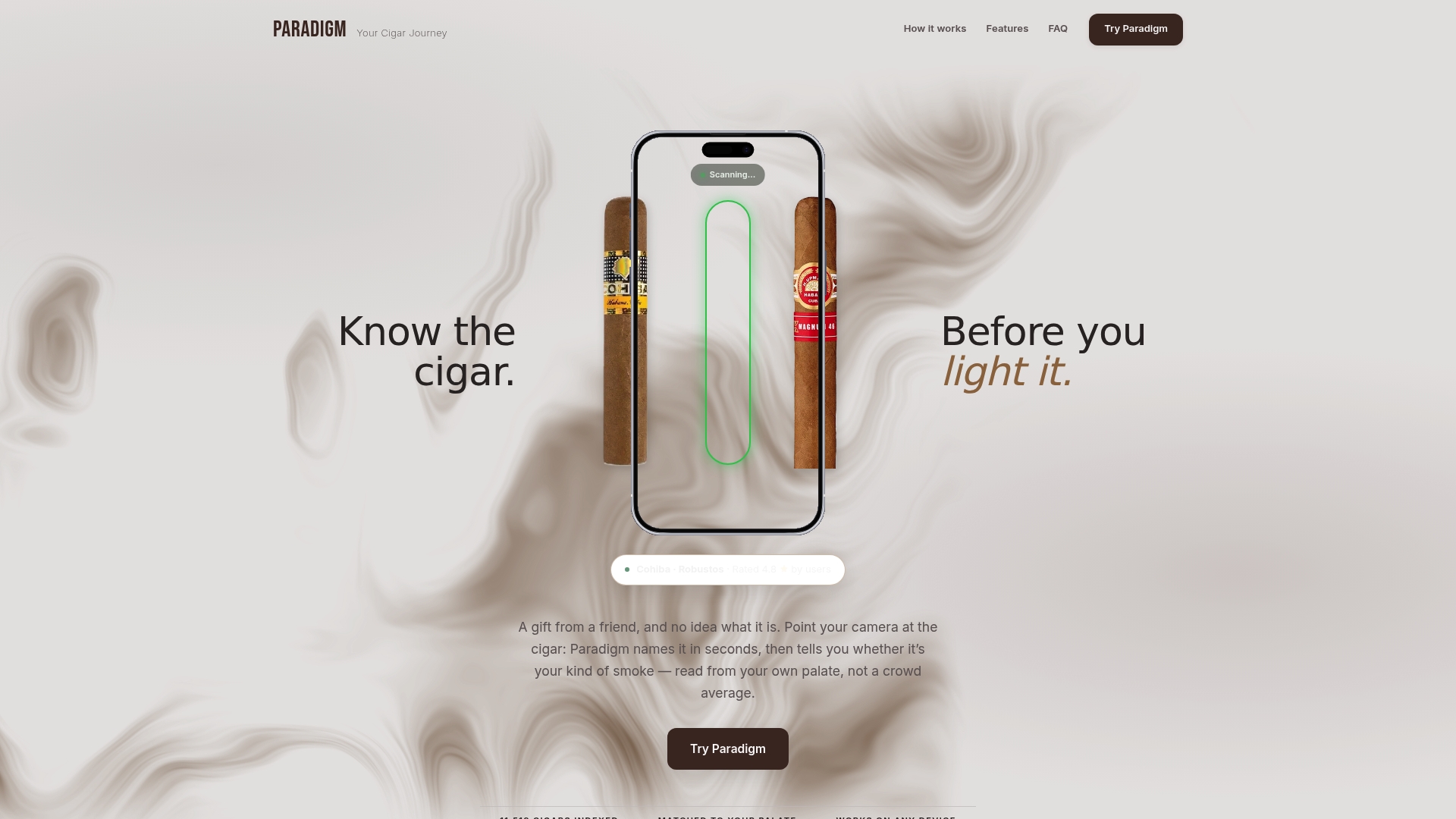
Every note, rating, and session you log builds a searchable smoking history and feeds a five-dimension palate profile that gets sharper the more you use it. Because it runs as a progressive web app, you can add it straight to your phone's home screen without downloading anything from an app store. A simple way to start: run one tasting session using the three-third workflow above, then log it in Paradigm and compare your notes against its Tasting Match the next time you're deciding between two similar blends.
Sources
- Correlation study on microbial communities and volatile flavor compounds in cigar tobacco leaves of diverse origins | Applied Microbiology and Biotechnology | Springer Nature Link
- Cigar Flavours And Tasting Notes (2026 Guide)
- How to Choose a Cigar: An Expert Guide to Size, Strength & Flavor
FAQ
What's the fastest way to choose cigars by taste as a beginner?
Start with a mild to mild-to-medium strength cigar, check the wrapper color for a directional flavor clue, and taste it using the three-third method while jotting down quick notes. Repeat with one variable changed each time, like a different wrapper or origin, so you can isolate what you actually enjoy.
Does a darker wrapper always mean a stronger cigar?
No, wrapper color signals flavor tendencies like sweetness and richness more reliably than it signals strength. A maduro wrapper often tastes sweeter and richer, but the cigar's actual strength depends on the filler tobacco, which is why strength and flavor are separate qualities worth tracking independently.
How many cigars should I try before I understand my taste preferences?
There's no fixed number, but repeating a handful of distinct profiles (one mild Connecticut, one medium Nicaraguan puro, one Dominican-heavy blend) and logging notes on each usually reveals a clear pattern within 8 to 10 cigars. Recording notes as you go matters more than the total count, since memory alone fades fast between smokes.
Can I sample a cigar's flavor without smoking the whole thing?
Yes, splitting a cigar with a friend, asking a shop for a half-smoke, or trying cigarillos of a similar blend all let you sample flavor without full commitment. This is especially useful for pricier or limited-release cigars where you want confidence in the profile before buying a box.
How does Paradigm help me choose cigars by taste?
Paradigm scans a cigar — band, wrapper, shape, and dimensions — and checks it against your saved strength and flavor preferences to generate a personalized Tasting Match before you light up. It also lets you record tasting notes, rate cigars, and build a private smoking history that refines your palate profile over time through the Paradigm app.
Recommended
- How do I deliberately get better at telling cigars apart instead of everything tasting the same?
- Why does a cigar taste completely different by the last third than it did at the start?
- How are cigar flavours categorized, and what does a term like 'barnyard' actually mean?
- How do I decide what cigar to smoke next instead of picking randomly?